Certified Grade-A vitreous china sanitary fixtures manufactured for international distributors, real estate developers, and hospitality project buyers.
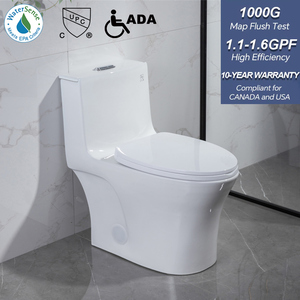
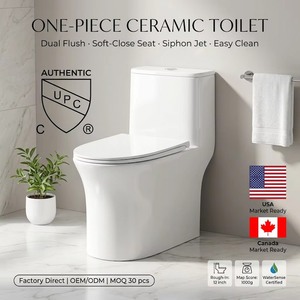
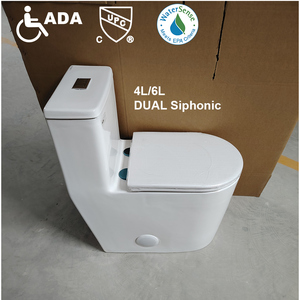
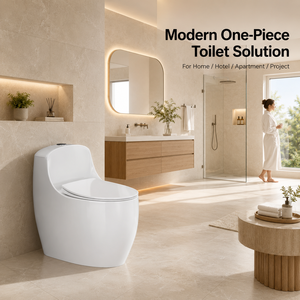
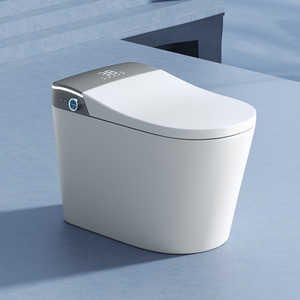
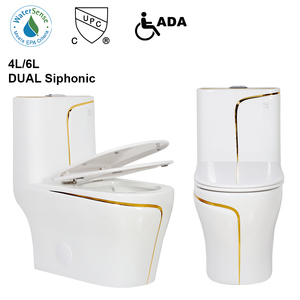
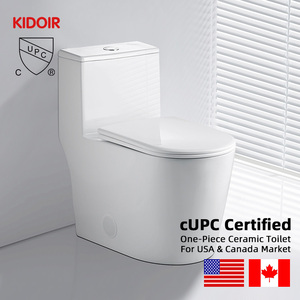
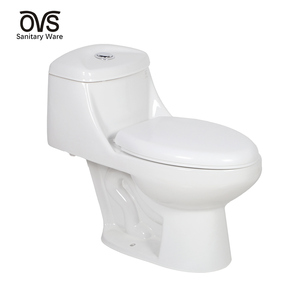
The global sanitary ware supply chain relies heavily on China’s mature industrial clusters, primarily localized in Foshan (Guangdong Province), Chaozhou, and Fujian. China manufactures over 55% of the world’s vitreous china fixtures. For commercial importers, engineering procurement leads, and international distributors, selecting top-tier China One-Piece Ceramic Toilets Suppliers & Exporters requires evaluating raw material formulations, high-temperature vitrification techniques, hydrodynamic design, and international compliance management.
One-piece ceramic toilets represent a structural evolutionary leap over traditional two-piece models. By seamlessly fusing the water tank and toilet bowl into a unified ceramic body during pressure casting, one-piece toilets eliminate the dirt-accumulating crevice between tank and bowl. This integration improves structural stability, prevents tank-to-bowl gasket leakage, reduces commercial maintenance costs, and simplifies cleaning protocols in high-traffic installations like luxury hotels, villas, and multi-family residential towers.
From a procurement perspective, importing ceramic toilets directly from specialized Chinese OEM/ODM factories provides significant cost-efficiency, scalable manufacturing volume, and custom design capabilities. However, navigating quality variances between suppliers requires detailed knowledge of core manufacturing benchmarks—including kiln temperature curves, internal trapway glazing, and siphonic flushing pressure dynamics.
The durability and hygiene performance of a ceramic water closet are dictated by two critical engineering factors: vitrification thermal dynamics and surface glazing chemistry.
Fired in continuous tunnel kilns for 18–22 hours at temperatures reaching 1280°C. This converts clay into a crystalline structure with a water absorption rate under 0.2%, far exceeding the international standard of 0.5% (ASME A112.19.2).
Formulated with nano-titanium dioxide (TiO2) particles, the 1.2mm thick glaze fills surface pores. This creates a hydrophobic surface that resists bacterial adhesion, lime scale buildup, and chemical staining.
Unlike lower-tier units with unglazed internal trapways, premium Chinese exports feature robotically glazed S-trap pathways (minimum 50mm / 2-inch diameter), eliminating friction and preventing blockages.
Modern one-piece toilets utilize precise fluid dynamics to achieve high MaP (Maximum Performance) flush scores while lowering water usage. Chinese manufacturers produce two primary flushing architectures for global export markets:
| Flushing Technology | Hydraulic Mechanism | Water Consumption | Primary Export Markets | Key Advantage |
|---|---|---|---|---|
| Siphonic Jet Flush | Water jets push waste into the trapway while a siphonic vacuum pulls contents from below. | 4.8L / 1.28 GPF (Single / Dual) | North America (USA, Canada), Mexico | Quiet operation, high water surface area preventing bowl staining. |
| Super Swirl (Rimless Jet) | Dual water jets blast horizontally along the rim, creating a high-velocity vortex. | 4.0L / 6.0L (1.0 / 1.6 GPF) | Europe, Australia, Southeast Asia | Exceptional rim cleaning, rimless hygiene design, reduced water usage. |
| Washdown Flush | Gravitational drop pushes waste directly down without creating a strong siphon. | 3.0L / 4.5L (0.8 / 1.2 GPF) | UK, Middle East, South America | Compact P-trap footprint, low risk of clogging with large solids. |
To clear customs smoothly and satisfy regional municipal building codes, imported ceramic sanitary fixtures must meet strict international certification standards. Top Chinese suppliers hold verified credentials for various regulatory environments:
Ensures ceramic structural integrity, hydraulic performance, and standard dimensions (12-inch / 300mm or 14-inch / 400mm rough-in). Required for commercial sales in the US and Canada.
Comfort height designs featuring a rim height of 16.5 to 19 inches (420–480mm) from floor to seat top, easing access for elderly users and individuals with physical disabilities.
EPA WaterSense certification requires flush volumes at or below 1.28 GPF (20% less than the 1.6 GPF standard). CE compliance guarantees health, safety, and environmental standard alignment across the EU.
B2B buyers, sourcing managers, and architectural specifiers must realign their inventory strategies with emerging luxury bathroom design requirements and water management legislation. Key trends shaping procurement include:
Traditional one-piece ceramic bases are increasingly combined with intelligent electronic bidets. Features like foot-sensation kick flushing, heated seats, instant warm water washing, and UV nozzle sterilization are becoming standard in modern residential builds.
While traditional glossy white accounts for 80% of volume, high-end hospitality projects increasingly demand matte black, concrete grey, brushed metallic, and custom golden accents fired directly into the ceramic glaze.
Full skirted designs conceal the S-trap pathways behind smooth ceramic walls. This aesthetic upgrade speeds up commercial cleaning cycles by 40% and simplifies housekeeping operations in hotel settings.
E-commerce distribution requires robust packaging. Leading suppliers use 7-ply honeycombed corrugated cartons with molded expandable polyethylene (EPE) foam, passing ISTA-1A drop tests to guarantee zero breakages during transit.
Partnering with an established Chinese sanitary ware exporter offers global wholesale partners and engineering contractors distinct operational advantages:
Standard MOQ for custom logo branding and special packaging starts at 50 to 100 units per model. Full container loads (FCL 40HQ) allow mixing up to 3 to 4 models to lower per-unit freight costs.
Leading manufacturers supply dual-rough-in S-trap configurations (300mm/400mm floor outlet) for the Americas and Asia, as well as P-trap configurations (180mm wall outlet) designed for European plumbing infrastructure.
Units are secured using drop-tested 7-ply corrugated boxes, reinforced corner protectors, molded EPE foam shells, and heavy-duty wooden palettization. Transit breakage rates are maintained under 0.3%.
Importers into the USA and Canada require cUPC certification (testing compliance with ASME A112.19.2/CSA B45.1) and EPA WaterSense compliance for low-flow municipal water regulations.
Standard production cycles range from 25 to 35 days post-deposit. Re-orders for standardized catalog items can be dispatched in as little as 15 to 20 days.
Looking to elevate your supply chain with cUPC-certified, high-efficiency one-piece ceramic toilets? Contact our engineering and export team today for factory-direct price sheets, CAD specifications, and custom OEM quotations.