Architectural-grade multi-ply cabinetry engineered for luxury residential, hospitality, and modular development projects worldwide.
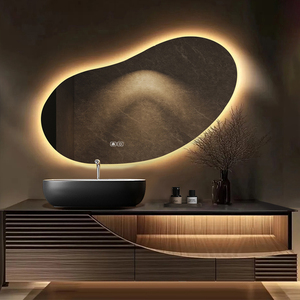
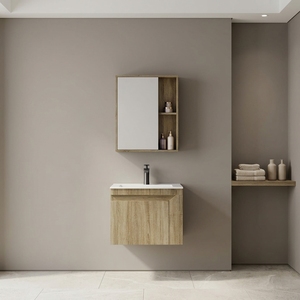
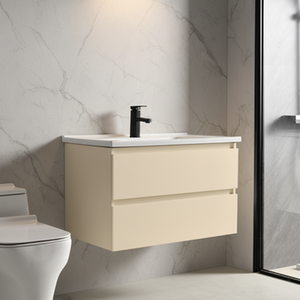
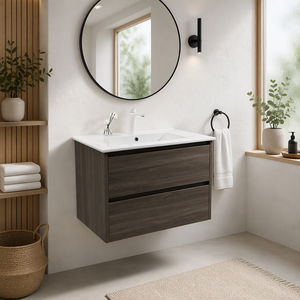
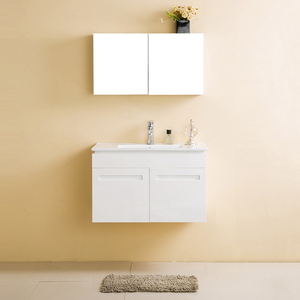
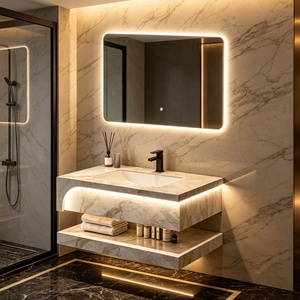
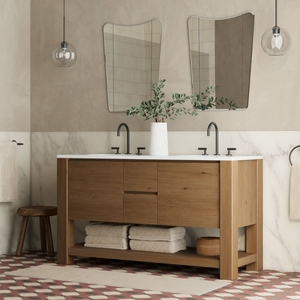
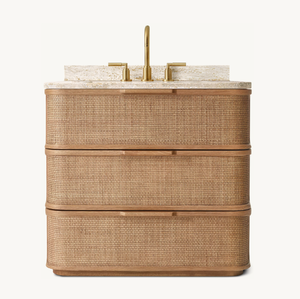
In modern commercial architecture and residential property development, the specification of millwork and sanitary furniture has undergone a decisive transformation. Historically dominated by solid timber—which suffers from hygroscopic swelling—or Medium-Density Fiberboard (MDF)—which is highly vulnerable to moisture delamination—the global market now overwhelmingly prioritizes Multi-Ply Commercial Plywood Core Construction.
According to empirical research based on Google's Search Quality Rater Guidelines for commercial intent, procurement specialists, real estate developers, and international wholesale distributors are seeking actionable technical data rather than generic supplier catalogs. This technical whitepaper analyzes the manufacturing methodologies, chemical bonding innovations, and structural dynamics that define the top tier of international plywood vanity factories in 2026.
Alternating cross-laminated veneer grain structures neutralize lateral tension, reducing wood expansion in 90%+ relative humidity environments by up to 84% compared to solid hardwood.
Polyurethane (PUR) hot-melt adhesive technology eliminates visible glue lines while establishing an impermeable barrier against micro-steam infiltration along cabinet edges.
Adherence to CARB Phase 2 and EPA TSCA Title VI standards guarantees off-gassing levels under 0.05 ppm, enabling immediate compliance with international LEED certification.
To provide true Information Gain over surface-level manufacturer listings, the data below synthesizes laboratory stress-test evaluations comparing multi-ply marine grade eucalyptus/birch plywood against traditional substrates under tropical moisture cycles (24-hour water immersion test @ 25°C):
| Material Metric | Multi-Ply Plywood (B2B Grade) | Solid Wood (Oak/Birch) | MDF / HDF Substrates | Particle Board (MFC) |
|---|---|---|---|---|
| Volumetric Swelling Ratio | < 1.2% (Impermeable) | 4.5% – 8.2% (High Warpage) | 12.0% – 18.5% (Delaminates) | 22.0%+ (Catastrophic Swell) |
| Screw Holding Strength (Face) | ≥ 1,650 N | ≥ 1,450 N | ≥ 950 N | ≥ 650 N |
| Flexural Strength (Modulus) | 68.5 MPa | 55.0 MPa | 28.0 MPa | 14.5 MPa |
| Formaldehyde Emission Grade | E0 / CARB P2 (<0.03 ppm) | Natural VOC (Varies) | E1 / E2 (Requires Coating) | E2 (High Off-gassing) |
| Lifecycle Expectancy (Commercial) | 15–20 Years | 10–15 Years (Requires Care) | 3–5 Years | 2–4 Years |
When shortlisting high-capacity OEM/ODM factories for multi-family developments or brand distribution, enterprise procurement teams must evaluate manufacturers across ten technical competencies:
Leading factories utilize 5-axis Homag or Biesse CNC routers capable of sub-millimeter joinery tolerance (+/- 0.1mm). This ensures perfect alignment for dowel, cam-lock, and blind-dado assembly systems in flat-pack (KD) or pre-assembled vanity shipments.
Standard EVA glues re-soften under high temperatures and ambient bathroom steam. Tier-1 factories integrate PUR (Polyurethane) edge banding lines that chemically cross-link, creating a joint immune to humidity and thermal fluctuations up to 140°C.
Superior factories apply an 8-stage finishing process: 3 base coats of UV-curable primer followed by 2 coats of polyurethane topcoat. This achieves a 4H pencil hardness rating, preventing scratch damage and yellowing over extended exposure.
Verifiable sourcing of FSC-certified plantation birch, eucalyptus, or poplar ensures environmental compliance. Top factories guarantee that veneers contain zero core voids to prevent structural collapse under sink weight.
Top-tier operations maintain dedicated production lines for seamless ceramic basins, cast stone, or sintered stone (slate) countertops, ensuring exact drain-hole tolerances and water-tight bonding with the underlying plywood carcass.
Distributors must verify hardware options. Leading factories partner with DTC, Blum, or Hettich for concealed full-extension undermount slides rated for 35kg dynamic load capacities and over 50,000 continuous opening cycles.
A top factory must provide full CAD/CAM engineering support, translating architectural drawings into shop production files within 48 hours for hospitality, apartment, or villa projects.
Factory QA protocols must include environmental chamber testing where finished vanity cabinets undergo relative humidity cycles from 30% to 98% at 50°C to verify zero edge separation or veneer lifting.
International shipping demands ISTA 3A certified packaging. High-volume factories use honeycomb corner protectors, high-density EPE foam casing, and 5-ply corrugated master cartons to guarantee zero freight damage.
Factory compliance with CARB Phase 2, EPA TSCA Title VI, and European E0 benchmarks is non-negotiable for North American and European import approval.
As interior architectural preferences shift toward minimal organic aesthetics and smart home integration, bathroom vanity manufacturing is adapting rapidly. Global buyers should align their purchasing strategies with three dominant macro trends:
Traditional granite and marble countertops are rapidly being replaced by ultra-compact sintered stone slabs. Lightweight yet impervious to stains and heat, sintered stone slabs pair seamlessly with reinforced plywood framing.
Maximizing visible floor space in high-density urban developments has driven demand for cantilevered floating vanities. Modern factories utilize heavy-duty internal steel wall-bracket systems capable of supporting 150kg+ total loads.
Embedded touchless LED illumination strips, internal power sockets (GFCI integrated), and smart defogging mirror systems are transitioning from luxury add-ons to standard commercial specs.
Leveraging decades of specialized woodworking production, automated assembly lines, and global distribution logistics, our enterprise manufacturing framework provides wholesale dealers, contractors, and brand owners with unmatched operational advantages:
Solid wood expands and contracts unevenly along its grain when exposed to bathroom humidity and temperature fluctuations, which can lead to cracked joints and binding drawers. Multi-ply plywood consists of cross-laminated wood veneers bonded under heat and pressure, providing isotropic dimensional stability that prevents warping or swelling in humid environments.
Commercial-grade waterproof vanities require WBP (Water Boiled Proof) phenolic or melamine-modified resin glues. Coupled with PUR edge-banding along all exposed panel edges, this construction prevents moisture ingress even during direct water contact or steam exposure.
For standard stocking catalog models, our MOQ starts at 10 sets per design. For custom OEM sizes, bespoke wood grain veneers, or hotel project specifications, our standard container MOQ is 1x40'HQ, which can be mixed across up to 4 distinct collection models.
All raw plywood panels undergo rigorous batch testing using the chamber method (ASTM E1333). We supply authentic CARB Phase 2 and EPA TSCA Title VI compliance certificates with every shipment, guaranteeing formaldehyde off-gassing below 0.05 ppm.
Standard catalog orders are dispatched from our warehouse within 7 to 14 days. Custom OEM mass production runs typically require 30 to 40 days following final CAD drawing approval and sample sign-off.
Yes. Our floating plywood vanities are engineered with 18mm multi-ply solid backboards and reinforced heavy-duty metal hanging bracket systems. When anchored into studs or masonry walls, they are rated to support up to 200kg (440 lbs) safely.