High-precision engineered hydronic and electric heated towel rails manufactured to international electrical compliance standards (UL, CE, RoHS, IP55). Available for bulk OEM/ODM procurement.
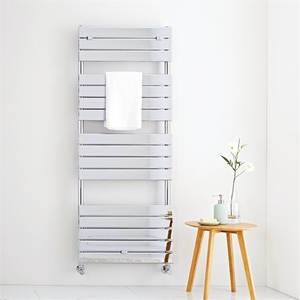
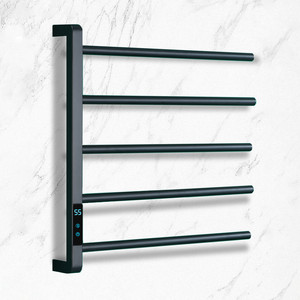
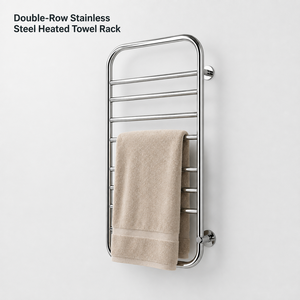
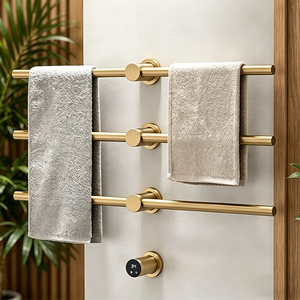
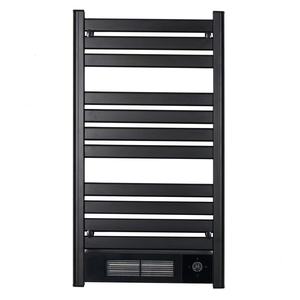
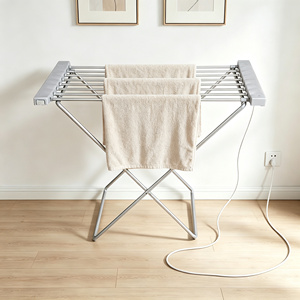
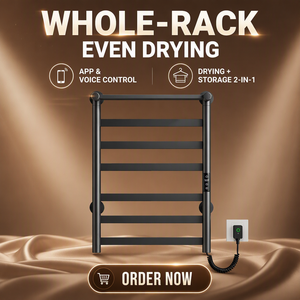
The global heated towel rack market has undergone a fundamental technological transition over the past decade. Moving away from traditional fluid-filled hydronic radiators that require complex plumbing infrastructure, modern commercial real estate developments, luxury hotel chains, and residential distributors are overwhelmingly shifting toward dry-element carbon fiber electric heated towel racks and PTC fan-assisted hybrid warmers.
As a global B2B buyer, importer, or wholesaler, navigating China’s manufacturing ecosystem requires deep clarity regarding raw material grade verification (SUS304 vs. Low-Grade Stainless Steel), IPX4/IP55 ingress protection compliance, surface finishing durability (PVD Physical Vapor Deposition electroplating vs. standard powder coating), and internal heating technologies. This whitepaper establishes definitive engineering criteria for selecting a reliable China factory partner.
Unlike legacy fluid-filled towel warmers (which suffer from slow thermal response times, fluid leakage risks, and uneven heating), state-of-the-art Chinese manufacturing facilities now utilize silicone-coated carbon fiber dry heating wires. This technology delivers a 98.6% thermal conversion efficiency, reaching target operational temperatures (50°C to 55°C) within 3 to 5 minutes while reducing energy consumption by up to 35% compared to traditional heating cables.
When procuring wholesale heated towel racks, product lifespan and corrosion resistance in humid bathroom micro-environments depend entirely on material composition and weld seam integrity.
Leading China manufacturers prioritize high-nickel SUS304 stainless steel over budget-tier SUS201 or carbon steel. SUS304 contains a minimum of 8% Nickel and 18% Chromium, providing exceptionally high resistance to moisture-induced oxidation and chemical cleaning agents. OEM buyers should insist on spectroscopic testing reports (SGS/TÜV certified) to verify chemical composition prior to mass assembly.
To meet high-end modern bathroom design requirements, factories employ distinct surface finishing methodologies:
Evaluation of core heating systems for commercial procurement specifications.
| Heating Core Technology | Thermal Response Time | Energy Efficiency | Lifespan Expectancy | Ideal Commercial Application |
|---|---|---|---|---|
| Carbon Fiber Dry Element | 3 - 5 Minutes | High (98.6% Conversion) | > 50,000 Hours | Luxury Hotels, Residential Real Estate, Modular Bathrooms |
| Hydronic Hot Water Circulation | 20 - 30 Minutes | Medium (System Dependent) | > 30,000 Hours | Central Heated Buildings, European Renovations |
| PTC Fan-Assisted Blower | Instant Airflow (< 1 Min) | High (Rapid Drying) | > 25,000 Hours | High-Humidity Zones, Commercial Spa & Wellness Facilities |
| Fluid-Filled Alloy Element | 15 - 20 Minutes | Moderate | > 20,000 Hours | Entry-Level Retail Markets, Budget Housing |
Full-stack OEM/ODM manufacturing capability designed to support high-volume distributors, hotel project contractors, and online bathroom brands.
All electric towel warmers undergo 100% high-voltage dielectric insulation testing and water-jet ingress testing to guarantee safety compliance in Zone 2 bathroom environments.
Equipped with microchip digital thermostats, touchscreen controls, and optional Wi-Fi/Tuya smart app connectivity supporting 1-9 hour timer auto-off schedules.
Seamless 360-degree TIG robotic laser welding eliminates internal oxidation points and delivers clean, structural-grade joints capable of enduring high internal pressure.
Modular junction design allows easy conversion between concealed hardwired wall installation (ideal for modern commercial construction) and standard plug-in power cords.
Custom laser etching for brand logos, drop-test certified mail-order packaging, and flexible low Minimum Order Quantities (MOQs) tailored for growing e-commerce platforms.
Full factory certification suite: ISO9001 quality management, UL 499 (North America), CE & RoHS (Europe), SAA (Australia), and KC (South Korea) electrical safety accreditations.
As sanitaryware procurement shifts toward holistic bathroom wellness and energy efficiency, heated towel rack manufacturing is evolving across three primary dimensions:
Modern luxury architecture demands clean, uncluttered visual planes. Standard exposed cord configurations are being rapidly replaced by hidden in-wall wiring systems. Advanced manufacturers now supply pre-embedded installation mounting boxes with magnetic faceplates, allowing contractors to snap heated towel rails directly into place post-tiling without exposed screws or cabling.
In urban apartments and compact boutique hotel bathrooms, space optimization is paramount. Dual-action units—combining traditional conductive warming bars with an integrated PTC ceramic fan blower (500W to 1000W)—provide simultaneous towel drying and bathroom space heating. This eliminates the need for separate overhead wall heaters while accelerating towel drying times to under 30 minutes.
With tightening international energy directives (such as the EU Ecodesign ErP Directive), heated towel racks are moving away from continuous manual operation. Factories are standardizing built-in PID constant temperature microcontrollers that automatically modulate power wattage depending on ambient room temperature and towel moisture load, keeping surface temperatures at a consistent, safe 55°C without energy waste.
Chrome is no longer the sole dominant finish in project specifications. B2B procurement data shows exponential demand growth for Gunmetal Gray, Brushed Nickel, PVD Brushed Gold, and Matte Black. OEM factories with in-house PVD vacuum coating chambers offer precise color-matching with major faucet and shower hardware brands, providing unified finish collections for high-end residential real estate developments.
Answers to essential technical, logistical, and compliance questions when importing wholesale towel warmers from China.
For safe installation in bathroom environments (Zone 2), towel warmers must carry at least an IPX4 rating (splash-proof). However, premium export manufacturers build products to IP55 standards (water jet protection), preventing moisture damage during shower spraying or high condensation scenarios.
North American imports require cULus or ETL listing complying with UL 499 standards. European markets demand CE, RoHS, and Low Voltage Directive (LVD) compliance. Australian markets require SAA/RCM certification. Reliable China suppliers provide complete test reports for customs clearance.
Standard lead times for full container load (FCL) production range from 25 to 35 days after sample approval and deposit confirmation. Rapid-ship programs for standard inventory models can be dispatched within 10 to 14 days.
Dry carbon fiber heating elements heat up 4x faster, eliminate fluid leakage risks, weigh significantly less (reducing shipping freight costs), and distribute heat evenly across every rail bar. Oil-filled radiators are heavier, prone to seal degradation over time, and take longer to reach optimal temperature.
Yes. OEM orders are tailored to destination grid standards: 110V-120V 60Hz with NEMA plugs/hardwire for North America, or 220V-240V 50Hz with Schuko, UK 3-pin, or AU plugs for European, British, and Australian markets.
Rigorous factories implement a 4-step QA workflow: 1) Raw material chemical analysis, 2) High-voltage insulation leakage testing (1500V/10mA/1s), 3) Continuous 4-hour burn-in thermal testing, and 4) ISTA-certified drop testing for consumer packaging.