Discover buying guides, renovation inspiration, smart toilet features, and expert bathroom care tips.
Modern bathrooms need storage that feels calm, useful, and carefully considered. Linen Side Cabinets offer a practical way to organize towels, toiletries, and daily essentials without overwhelming the room. Their vertical shape can fit beside a vanity, near a shower, or within a narrow wall recess. This makes unused space more valuable.
In my experience, the best cabinet choices begin with the bathroom’s real conditions. Measure the floor area, door swing, plumbing position, and walking clearance before choosing a design. A cabinet that looks elegant online may feel awkward beside a crowded basin. That mistake is easy to make. Moisture resistance also matters. Look for sealed surfaces, durable hinges, and finishes designed for humid interiors. Solid construction helps the cabinet remain stable when towels are stored inside. Soft-close doors can reduce noise during early mornings and busy family routines.
Linen Side Cabinets also support a more personal design approach. Light wood can soften white tiles, while matte finishes create a quieter, contemporary appearance. Adjustable shelves are especially useful because folded towels rarely stay the same size. However, more storage is not always better. An oversized cabinet can make a compact bathroom feel tight and poorly balanced. I have found that simple layouts often perform better than highly decorated ones. The right cabinet should make everyday use easier, not merely fill an empty corner. Careful installation and regular ventilation still matter, even with quality materials.
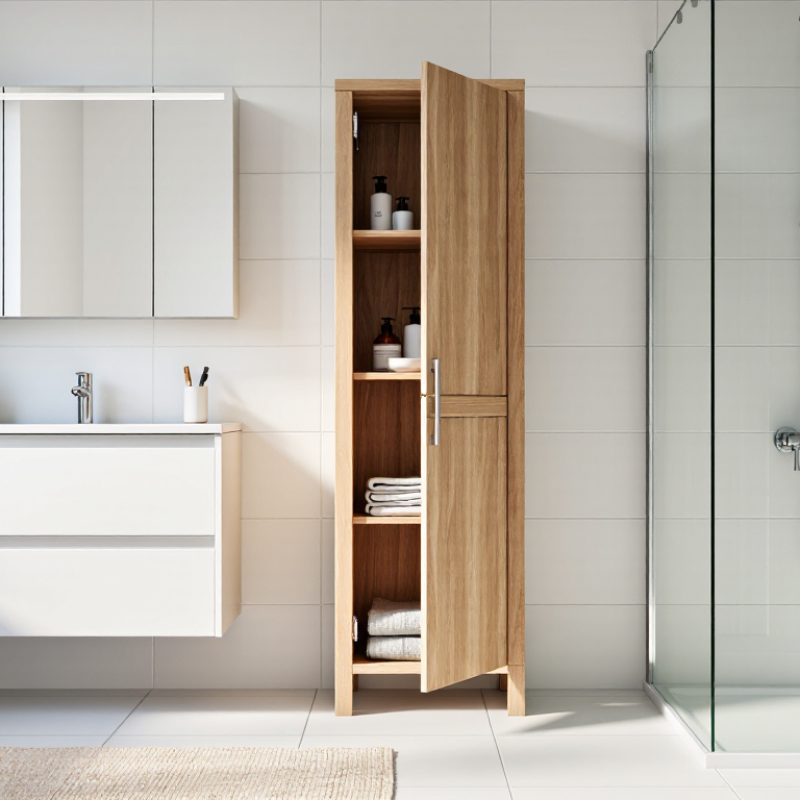
A linen side cabinet is a compact bathroom storage unit placed beside a vanity, toilet, or open wall. Despite its name, it does not usually contain linen fabric. “Linen” describes its practical purpose: storing towels, washcloths, toilet paper, and daily toiletries. Most models combine adjustable shelves with drawers or a closed door. This keeps folded towels visible, but protects them from splashes and dust.
The cabinet differs from a vanity because it does not normally hold a sink. Its narrower footprint suits modern bathrooms where every 30 centimeters matters. The 2024 Houzz Bathroom Trends Study surveyed 1,411 homeowners and reported that 76% upgraded vanity cabinets during renovations. That finding reflects a wider demand for organized bathroom storage, although a side cabinet can provide capacity without replacing a functioning vanity. A 30-centimeter-wide unit may hold several rolled towels, spare soap, and cleaning supplies.
Material selection requires professional attention. Look for moisture-resistant board, sealed edges, corrosion-resistant hardware, and soft-close hinges. Place the cabinet away from direct shower spray when possible. Good ventilation matters too. One overlooked detail is door clearance. A beautiful cabinet becomes frustrating if it blocks a drawer or bathroom entrance.
The choice is not perfect. Open shelves improve access but collect dust; closed doors look calmer but hide clutter. Measure plumbing, skirting boards, and walking space before buying. The cabinet should support the room, not make it feel narrower.
| Data Dimension | Typical Information | Why It Matters in a Modern Bathroom |
|---|---|---|
| Definition | A linen side cabinet is a compact bathroom storage unit designed for towels, toiletries, toilet paper, cleaning supplies, and other everyday essentials. | It adds organized storage without requiring the wall area or floor space of a full-height linen tower. |
| Common Width | 300–600 mm (approximately 12–24 in) | The narrow profile works well beside a vanity, toilet, bathtub, or shower enclosure while preserving walking space. |
| Common Depth | 300–450 mm (approximately 12–18 in) | A moderate depth provides useful shelf capacity while reducing the risk of obstructing doors, drawers, or circulation areas. |
| Common Height | 600–1,200 mm (approximately 24–47 in) | Different heights allow the cabinet to function as a low side unit, a vanity companion, or a taller storage solution. |
| Typical Storage Capacity | Usually includes 1–3 adjustable or fixed shelves, with enclosed doors, open compartments, drawers, or a combination of these features. | Multiple storage zones make it easier to separate frequently used items from spare towels and household supplies. |
| Suitable Materials | Moisture-resistant engineered wood, plywood with a sealed finish, powder-coated metal, tempered glass, or solid wood with appropriate bathroom protection. | Bathrooms contain humidity and occasional splashes, so sealed or moisture-resistant materials generally offer better durability than untreated wood. |
| Surface Finishes | Common finishes include painted, laminated, thermally fused, wood-look, matte, satin, and powder-coated surfaces. | Light, neutral, and matte finishes can complement modern bathroom designs while making water marks and fingerprints less visually prominent. |
| Moisture Protection | Look for sealed edges, protected joints, corrosion-resistant hardware, and finishes intended for humid indoor environments. | Sealed surfaces help limit swelling, peeling, rust, and water absorption when the cabinet is exposed to normal bathroom humidity. |
| Ventilation Requirements | Open shelves or ventilated doors can improve air circulation; enclosed cabinets should not be used to store persistently wet textiles. | Allowing towels and fabrics to dry before storage helps reduce trapped moisture and musty odors. |
| Installation Options | Freestanding models are easy to reposition, while wall-mounted models leave the floor visible and simplify floor cleaning. | The choice depends on available floor area, wall construction, storage needs, and the desired visual style. |
| Recommended Placement | Common locations include beside a vanity, next to a toilet, near a bathtub, or along an unused wall section. | Placing the cabinet near the point of use reduces clutter and keeps towels and toiletries within convenient reach. |
| Safety Considerations | Freestanding cabinets should be placed on a stable, level surface and secured to the wall where required, especially in homes with children. | Proper anchoring reduces the risk of tipping, while soft-close hinges and rounded edges can improve everyday safety. |
| Cleaning and Care | Wipe spills promptly with a soft, damp cloth and mild cleaner; avoid abrasive pads, excessive water, and harsh chemicals unless approved for the finish. | Regular, gentle care helps preserve the surface finish and reduces the chance of moisture-related damage. |
| Space-Saving Benefit | Vertical and compartmentalized storage uses underutilized wall or corner space without expanding the bathroom footprint significantly. | This makes a linen side cabinet practical for compact bathrooms, guest bathrooms, and apartments. |
| Best Items to Store | Folded hand towels, washcloths, spare toilet paper, toiletries, hair-care products, and small cleaning accessories. | Keeping these items together creates a cleaner countertop and improves access during daily routines. |
| Key Selection Checklist | Measure the available area, confirm door and drawer clearance, check shelf dimensions, verify moisture resistance, and identify wall or floor requirements. | Accurate measurements and suitable construction help ensure that the cabinet fits safely and performs well in a humid environment. |
Dimensions are typical planning ranges for bathroom linen side cabinets; actual specifications vary by cabinet design and installation method.
It is a compact bathroom storage unit beside a vanity, toilet, or open wall. Despite its name, it usually stores towels, toilet paper, toiletries, and cleaning supplies. It does not normally hold a sink.
A vanity usually supports a sink and countertop. A linen side cabinet focuses on storage. Its narrower footprint can suit bathrooms where every 30 centimeters matters.
A 30-centimeter-wide unit may hold rolled towels, spare soap, and cleaning supplies. Adjustable shelves can fit tall bottles or folded hand towels. Do not pack shelves tightly.
Choose moisture-resistant panels, sealed edges, and corrosion-resistant hardware. Soft-close hinges can reduce noise and wear. These features help, but they cannot prevent all water damage.
Keep it away from direct shower spray when possible. Check the door swing, plumbing, skirting boards, and walking space. Measure twice.
Open shelves make daily items easier to reach, but they collect dust. Closed doors create a calmer appearance and hide clutter. They can also make small items harder to find.
Store daily items at eye level. Keep backup supplies on higher shelves. Use small trays for cotton pads, razors, and skincare bottles.
Wipe wet surfaces promptly and inspect lower edges every few months. A raised base helps keep the cabinet away from small puddles. Good ventilation matters.
Do not choose a cabinet by appearance alone. A beautiful unit may block a drawer, doorway, or walking path. I would test its height with folded towels before buying.
Linen Side Cabinets are practical bathroom storage units designed to keep towels, toiletries, cleaning supplies, and everyday essentials neatly organized. Their slim, vertical structure makes efficient use of limited space while adding a clean and balanced look to modern bathrooms. With simple lines, neutral finishes, and adaptable designs, they can complement contemporary, minimalist, or transitional interiors without overwhelming the room.
When choosing a Linen Side Cabinet, consider the bathroom’s available space, layout, moisture levels, and storage needs. Durable materials, protective finishes, sturdy hinges, adjustable shelves, and easy-clean surfaces can improve long-term performance. Options such as open shelving, enclosed compartments, drawers, or mixed storage allow homeowners to display frequently used items while concealing clutter. The right cabinet should combine attractive design, reliable durability, convenient access, and sufficient capacity for comfortable daily use.