A freestanding towel rack gives towels a dedicated place to dry without wall-mounted hardware. In a small bathroom, it can stand beside a tub, shower, or vanity, keeping a clean towel within easy reach. Many designs have several bars, allowing bath towels, hand towels, and damp swimwear to hang separately rather than sit in a pile. That airflow matters. Towels may dry more evenly when they have room around them, though ventilation and humidity in the room also affect drying time.
Freestanding Towel Racks can also be useful in guest bathrooms, laundry rooms, or near a pool. Because they can be moved, they offer flexibility when cleaning or rearranging a space. Still, a rack is not a dryer. A crowded corner can slow drying, and a lightweight model may wobble under heavy, wet towels. This guide looks at what these racks are designed to do, where they work best, and which details deserve attention, including bar spacing, base stability, materials, and available floor space. The best choice depends on the room and the towels you use; a stylish rack that blocks a walkway may not be practical. That trade-off is easy to miss.
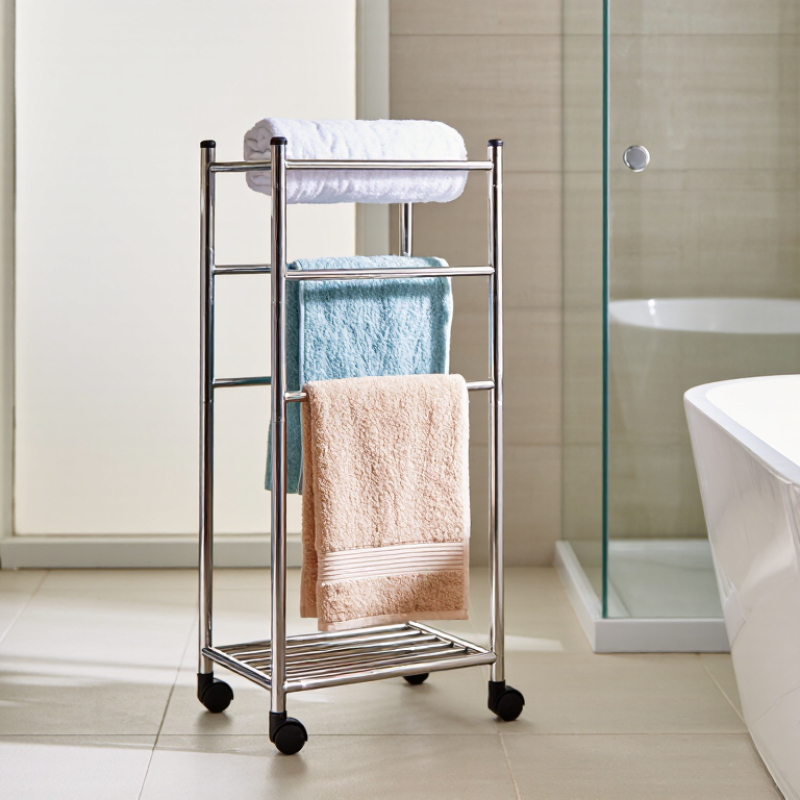
What a Freestanding Towel Rack Is
What a Freestanding Towel Rack Is
A freestanding towel rack is an upright frame designed to hold towels without attaching to a wall. It usually has a weighted or wide base, a central support, and one or more horizontal bars. Some models include several rails at different heights, giving towels room to hang separately. No drilling is needed. That can be useful in rented homes or bathrooms with tiled walls.
Unlike a hook, a rack lets a towel spread out instead of bunching in one spot. Better airflow may help it dry between uses, though drying time still depends on room humidity and ventilation. A rack often fits beside a bathtub, shower, or vanity. Measure the available floor space first, including the room needed to walk past it.
Materials and construction affect how well a rack suits a bathroom. Stainless steel and coated metal are common choices, while wood can add a warmer look but may need more care around splashes. Check that the base sits flat and the rails feel secure before hanging damp towels. A freestanding rack can still wobble if it is narrow, overloaded, or placed on an uneven floor. It is not perfect for every bathroom; a crowded room may make even a compact frame feel in the way.
How Its Design Holds and Dries Towels
A freestanding towel rack holds towels on open rails, keeping them off the floor and within reach. Its separate bars let fabric hang rather than bunch over a single hook. That matters. A damp bath towel needs exposed surface area and moving air to dry evenly. Leaving a small gap between towels can help; folding a thick towel tightly over a narrow rail may slow drying.
The frame’s shape affects both capacity and airflow. Taller racks often offer several levels, but towels on upper bars can partly cover those below. A wide, stable base helps prevent tipping when a heavy towel is pulled away. Still, a rack can wobble on an uneven tile floor, so check its feet and placement. Put it where air circulates, not pressed against a wall or crowded behind a door. Drying also depends on room humidity, towel thickness, and ventilation. The rack helps, but it cannot make a humid bathroom dry by itself. In everyday use, a simple single-bar design may work better than a crowded multi-tier one. That trade-off is easy to overlook.
Where a Freestanding Towel Rack Can Be Used
A freestanding towel rack is useful wherever towels need to dry but wall drilling is impractical. In a family bathroom, place it near the shower, leaving enough room to walk past. In a guest room, it gives visitors a clear spot for damp towels. It also works in a laundry room or beside an indoor pool, provided the floor stays dry and level. No permanent fitting is needed. That flexibility matters in rented homes and rooms that change purpose.
The Houzz & Home Study 2024 reported median U.S. home-renovation spending of $24,000 in 2023, up from $22,000 in 2022. The report covers renovations broadly, not towel racks specifically. Still, it reflects investment in home improvements, where a movable accessory can offer a practical, low-commitment option. A rack is not always the neatest choice, though: in a narrow bathroom, its footprint may block a drawer or doorway. Measure first.
Tips: Keep the rack several inches from the wall for airflow. Spread towels across separate bars instead of layering them. Check that the base does not wobble on tile; a rack that shifts when towels are lifted soon becomes annoying.
Where Can a Freestanding Towel Rack Be Used?
A freestanding rack can keep towels accessible wherever there is a stable, level surface and enough room for airflow.
Suitability scores are illustrative, not survey results. Actual fit depends on the rack, available floor space, ventilation, and exposure to weather.
Which Types of Towels It Can Hold
A freestanding towel rack can hold bath sheets, bath towels, hand towels, and washcloths, provided its bars are wide and spaced apart. Common retail sizes are about 27 by 54 inches for a bath towel and 35 by 60 inches for a bath sheet; hand towels are often around 16 by 30 inches. These are typical dimensions, not fixed rules. A quick fit check helps: drape the largest towel over the bar and leave space for air to move around it.
Smaller bars or hooks suit hand towels and washcloths, which are easier to reach near a sink. Larger, open bars work better for damp bath towels. ASTM D5433-22 sets performance criteria for woven towels, including absorbency and dimensional change, useful factors when choosing towels that will be hung repeatedly. Grand View Research estimated the global bath towel market at USD 10.8 billion in 2023, reflecting a broad range of towel formats and uses. Still, capacity depends on the rack’s spacing: two thick towels pressed together may stay clammy, even when they technically fit.
How to Choose a Rack for Everyday Use
What Is a Freestanding Towel Rack Used For?
How to Choose a Rack for Everyday Use
A freestanding towel rack keeps towels off damp floors and gives them space to dry between showers. For everyday use, choose a height and bar layout that suit your household: one wide bar may fit a bath sheet, while several rails can separate hand towels from larger ones. Measure the available floor space, including room to walk past the rack. A narrow bathroom can make even a useful rack feel like an obstacle. Measure first.
Check stability before choosing a design. A broad, weighted base is less likely to wobble when someone lifts a towel quickly. Leave a little space between hanging towels so air can circulate, and place the rack away from direct shower spray. The U.S. Environmental Protection Agency’s A Brief Guide to Mold, Moisture and Your Home recommends keeping indoor humidity below 60 percent, ideally between 30 and 50 percent. A rack cannot control humidity, but good towel spacing and bathroom ventilation can help towels dry more effectively. I still find that crowded rails slow drying; it is an easy detail to overlook.
Tips: Compare the rack’s footprint with your bathroom measurements, then check its stated weight capacity. Choose corrosion-resistant materials for humid rooms, and look for smooth edges that will not snag fabric. If you move the rack often, test whether its base feels secure on your floor. A lightweight rack is convenient, but sometimes too light.
Conclusion
A freestanding towel rack is a movable fixture that keeps towels organized without needing to be mounted on a wall. Its open bars or rails allow air to circulate around hanging towels, helping them dry between uses while keeping them easy to reach. Depending on its design, a rack may have one or several levels for separating towels or making better use of vertical space.
Freestanding Towel Racks can be useful in bathrooms, laundry areas, bedrooms, or other spaces where extra towel storage is needed. They can hold hand towels, bath towels, and, on suitable designs, larger or heavier towels. When choosing a rack for everyday use, consider its stability, size, capacity, materials, and how easily it fits into the available space. A well-suited rack can make towels simpler to access and help keep a room tidy.