Design Ideas & Industry Trends

KubeBath Insights & Journal

Discover buying guides, renovation inspiration, smart toilet features, and expert bathroom care tips.

0%

Choosing Single Hole Bathroom Faucets is a small decision with daily consequences. The handle sits beneath your fingers, water hits the basin, and every detail becomes familiar. A faucet may look simple, but installation, water efficiency, reach, maintenance, and compatibility all matter.

The U.S. Environmental Protection Agency’s WaterSense program states that certified bathroom faucets use no more than 1.5 gallons per minute. They can use at least 30% less water than standard models while maintaining practical performance. The 2024 Houzz U.S. Bathroom Trends Study also shows continued interest in bathroom upgrades, especially cleaner layouts and improved functionality. These findings support a careful choice, not a purely visual one. Richard Trethewey, a plumbing and heating expert from This Old House, has offered a useful reminder: “The faucet is the most used plumbing fixture in the house.”

That sentence is easy to overlook. It should not be. A polished chrome faucet may suit a modern basin, while brushed nickel can better hide fingerprints and water marks. Spout height affects splash control. Handle position affects comfort. A ceramic cartridge may reduce dripping, but quality still depends on manufacturing and installation. WaterSense certification is helpful, yet it does not solve every problem. Some models feel restrictive, and some attractive finishes age poorly. This guide examines those trade-offs, including bathroom size, sink configuration, mounting requirements, cleaning habits, and long-term value. The perfect faucet probably does not exist. The right one should simply work quietly, every morning.
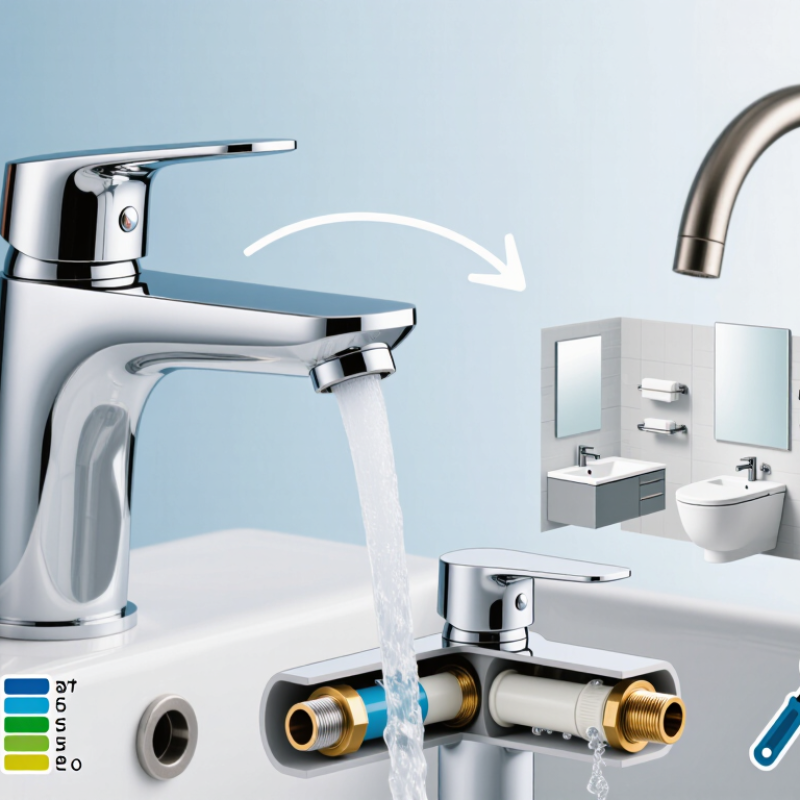
How to Choose Single Hole Bathroom Faucets?

Define Single-Hole Faucet Types and Standard 1-Hole Mounting Dimensions

Choosing a single-hole bathroom faucet starts with understanding its type and mounting geometry. A monobloc faucet combines the spout and handle in one body. A single-control faucet uses one lever for temperature and flow. Touchless models add sensors, batteries, or electrical connections. The cabinet must provide enough clearance beneath the sink.

The common North American deck opening is about 1-3/8 inches, or 35 millimeters. Many faucets accept deck thicknesses near 1-1/2 inches, but the manufacturer’s installation sheet controls the final decision. Supply connections are often 3/8-inch compression fittings. They are not universal. Measure the basin, countertop, and shutoff valves before ordering. A deck plate may cover unused three-hole openings, but it cannot correct a poorly centered hole.

Water efficiency also affects selection. The U.S. EPA WaterSense Bathroom Faucet Specification limits qualifying models to 1.5 gallons per minute, or 5.7 liters per minute, at 60 psi. That rate can reduce water use by more than 30 percent compared with standard 2.2-gpm faucets. ASME A112.18.1/CSA B125.1 covers plumbing supply fittings and helps confirm basic performance requirements. Still, standards do not guarantee a perfect fit. I once treated the 1-3/8-inch opening as universal; the deck thickness caused the real problem. Check hole diameter, shank length, seal position, and handle clearance together. That small inspection prevents a frustrating return.

How to Choose Single-Hole Bathroom Faucets?

Typical dimensions for single-hole faucet selection and 1-hole mounting preparation

Most single-hole bathroom faucets use one deck opening of approximately 32–35 mm (1¼–1⅜ in). A typical installation accommodates deck thicknesses from about 25–50 mm (1–2 in), while 3/8-inch compression supply connections are widely used. Always confirm the faucet’s installation instructions and local plumbing requirements before drilling or mounting.

Check WaterSense Flow Rates: Choose 1.5 GPM or Less for Efficiency

Choosing a single hole bathroom faucet involves more than matching the sink’s finish. Water efficiency should guide the decision, especially when the faucet is used many times each day. Check the WaterSense flow rate before comparing colors or handle styles. A faucet rated at 1.5 gallons per minute (GPM) or less can reduce water use without making handwashing feel inconvenient.

Look closely at the product specification, not only the advertisement. A lower flow rate may still provide a comfortable stream when the aerator mixes air effectively. During installation, I have found that water pressure, supply valves, and aerator cleanliness affect the experience. A faucet can meet the listed rate but feel weak in a home with restricted plumbing. That detail is easy to miss.

Measure the sink’s mounting hole and confirm that the faucet includes the correct plate or gasket. Single hole models usually create a clean, compact appearance, but their connections must fit the existing supply lines. Try the handle before final tightening. It should move smoothly without forcing your wrist. I once focused too much on appearance and overlooked the handle’s reach, which caused splashing near the basin edge. Check the flow rate again after installation, if possible. Real conditions can differ from the specification.

Compare Spout Height, Reach, Handle Control, and ADA Accessibility Needs

Choosing a single-hole bathroom faucet starts with the basin, not the finish. Spout height should clear the rim without creating a splash zone. A low spout suits shallow basins and compact vanities. A taller spout helps when washing hands or filling a small container. However, height alone can mislead. The outlet should aim near the drain, not the front edge. Measure the basin before shopping.

Spout reach deserves equal attention. A long reach may strike the backsplash or push water beyond the bowl. A short reach can leave wet spots around the drain. I would check the faucet’s technical drawing, then compare its reach with the basin’s centerline. The U.S. Environmental Protection Agency’s WaterSense specification limits bathroom faucets to 1.5 gallons per minute, compared with the federal 2.2-gallon standard. That represents a potential 30% reduction in flow, while maintaining required performance.

Handle control affects daily comfort. A single lever usually needs less movement than two separate handles. The 2010 ADA Standards require operable parts to work with one hand, without tight grasping, pinching, or twisting. They also set a maximum operating force of 5 pounds. Controls should remain within the user’s reachable area, especially in accessible bathrooms. The U.S. Access Board guidance places many operable features within a 48-inch maximum reach range. Still, real users differ. A lever that feels effortless to one person may feel stiff to another, so test the motion before installation.

Evaluate Materials, Ceramic Cartridges, Finishes, and Lead Limits

Choosing a single-hole bathroom faucet starts with materials, not appearance. Brass and stainless steel bodies generally offer stable structure, but verify the wetted components. The U.S. Environmental Protection Agency limits lead in wetted plumbing surfaces to a weighted average of 0.25 percent. Look for compliance with NSF/ANSI/CAN 61 and NSF/ANSI 372. Certification details matter more than phrases like “premium metal.”

Ceramic cartridges usually resist dripping better than older compression designs. However, they still need clean water. The Water Quality Association reports that sediment and mineral scale can shorten plumbing component life. A small mesh aerator can catch debris, but it is not a complete filter. Check cartridge availability before purchase. That detail is easy to miss.

Finishes need practical testing. Brushed surfaces hide fingerprints, while polished finishes show water spots quickly. In coastal homes, chloride-rich air may challenge decorative coatings. ASTM B117 salt-spray testing can indicate coating resistance, but it does not perfectly reproduce every bathroom. That limitation deserves attention. A finish can pass a laboratory test and still age poorly beside a damp sink.

Measure the countertop hole carefully. A single-hole faucet often needs a deck thickness within the installation range. Also confirm the supply-line size and shutoff-valve condition. I would not choose a faucet by color alone. The safest decision combines documented lead limits, a replaceable ceramic cartridge, and a finish suited to the room’s moisture and cleaning habits.

Match Installation Requirements, Warranty Terms, and Plumbing Standards

How to Choose Single Hole Bathroom Faucets?

A single-hole faucet must fit the basin before its finish catches your eye. Measure the mounting hole, deck thickness, and clearance beneath the counter. Most models need one centered opening, but some require an adapter plate. Check the supply-line length and shutoff-valve position. A cramped cabinet can turn a simple installation into an awkward repair.

Plumbing standards matter more than appearance.

Look for compliance with ASME A112.18.1/CSA B125.1 and NSF/ANSI/CAN 61, where applicable. These standards address performance, materials, and water-contact safety. Local codes may also require certified lead-free construction. The U.S. Environmental Protection Agency reports that WaterSense-labeled bathroom faucets use no more than 1.5 gallons per minute. That is at least 30% less flow than the federal 2.2-gpm limit. Small savings add up.

Read the warranty like an installer, not a shopper. Separate coverage for the cartridge, finish, leaks, and labor is common. Confirm the claim process, proof-of-purchase rules, and exclusions for improper installation. Some warranties protect the original buyer only. That detail is easy to miss.

I once treated a generous warranty as full protection, but labor was excluded and replacement parts took weeks. A better choice matches the faucet to your water pressure, mounting surface, and local plumbing rules. Leave room for doubt. Specifications can change.

FAQS

What flow rate should I choose for an efficient bathroom faucet?

Choose a faucet rated at 1.5 gallons per minute or less. It can reduce water use while keeping handwashing comfortable. Check the specification sheet, not only the product description. Measure twice.

Can a low-flow faucet still feel strong?

Yes, an effective aerator can mix air into the stream. Water pressure, supply valves, and aerator cleanliness also affect performance. A listed flow rate may feel weak when household plumbing restricts pressure. That assumption can fail.

How do I confirm that a single-hole faucet will fit?

Measure the sink or countertop mounting hole carefully. Confirm the deck thickness falls within the faucet’s installation range. Check the included plate, gasket, supply-line size, and shutoff-valve condition. Small mismatches create frustrating leaks.

What should I check before tightening the faucet?

Test the handle movement before final tightening. It should move smoothly without forcing your wrist. Also check the handle’s reach over the basin. I once focused on appearance and overlooked splash distance.

Which faucet materials are practical for regular bathroom use?

Brass and stainless steel bodies generally provide stable structure. Still, inspect the materials that contact water directly. A phrase like “premium metal” proves little without technical documentation. Details matter.

What lead information should I look for?

Look for documented compliance with applicable plumbing material standards. Wetted surfaces should meet the stated lead limit of 0.25 percent weighted average. Do not rely on vague safety language alone. Paperwork matters.

Are ceramic cartridges worth choosing?

Ceramic cartridges usually resist dripping better than older compression designs. They still need reasonably clean water for reliable service. Sediment and mineral scale can shorten cartridge life. A mesh aerator catches debris, but it is not a complete filter.

How should I choose the faucet finish?

Brushed finishes usually hide fingerprints and minor water marks. Polished finishes show spots quickly beside a frequently used sink. Damp or coastal rooms may challenge decorative coatings over time. Laboratory testing helps, but it cannot predict every bathroom.

Conclusion

Choosing the right Single Hole Bathroom Faucets begins with understanding the faucet type and confirming that your sink or countertop has a standard one-hole mounting configuration. For efficient water use, consider models with a WaterSense flow rate of 1.5 gallons per minute or less. Compare spout height and reach to ensure comfortable handwashing and sufficient clearance, while also evaluating handle control and accessibility features for users with different mobility needs.

Durability and safety are equally important. Look for faucets made from reliable materials, equipped with ceramic cartridges, and finished with coatings that resist corrosion and daily wear. Verify that the product meets applicable lead-content limits and plumbing standards. Before purchasing, confirm installation requirements, connection compatibility, warranty coverage, and maintenance support. A careful comparison of these factors will help you select a practical, efficient, durable, and accessible faucet for your bathroom.


Ethan

Ethan

Ethan is a professional marketing specialist with a deep understanding of the company’s products, services, and customer needs. Through a combination of market insight, strategic thinking, and clear communication, he helps present the company’s value in a practical and engaging way. His expertise......