Discover buying guides, renovation inspiration, smart toilet features, and expert bathroom care tips.
Global demand for bathroom technology is moving beyond appearance. Fortune Business Insights reports that the global smart toilet market was valued at approximately USD 8.8 billion in 2023. Its forecast also indicates continued growth through 2030. This trend creates opportunity, but growth alone does not guarantee a reliable product. Smart Toilets with Bidet must perform consistently in different homes, climates, and plumbing systems.
Global sourcing requires evidence, not attractive product photographs. The World Health Organization and UNICEF Joint Monitoring Programme reported that 3.5 billion people lacked safely managed sanitation services in 2022. This figure highlights the importance of hygienic design and dependable water management. Buyers should check water pressure requirements, inlet dimensions, heating methods, voltage, plug standards, and leakage protection. A model designed for one market may fail in another.
Small details matter.
Look for recognized electrical and plumbing certifications, documented factory inspections, and clear test records. EPA WaterSense guidance can help evaluate water efficiency, although certification availability differs by market. Suppliers should also provide installation drawings, replacement filters, remote-control specifications, and warranty procedures. The International Code Council and local plumbing authorities remain useful references for regional compliance checks.
The best sourcing decision balances comfort, safety, serviceability, and total landed cost. A low purchase price can become expensive after damaged ceramic, unavailable control boards, or unclear software support. I have seen product comparisons overvalue seat features and undervalue spare-part access. That is a weakness worth acknowledging. Reliable procurement needs factory communication, sample testing, independent inspection, and realistic after-sales planning before a large order is approved.
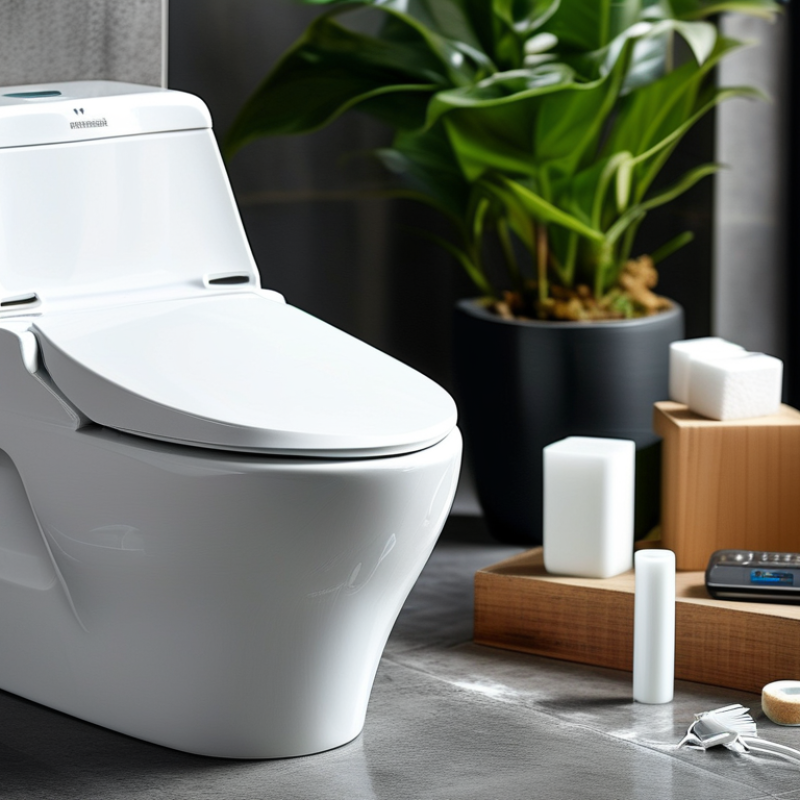
A smart toilet with bidet combines a toilet pan, electronic seat, and integrated cleansing system. Unlike a standard toilet, it uses a retractable nozzle to deliver water for personal hygiene. The user can usually adjust water temperature, spray pressure, and nozzle position. Some models provide separate rear and front washing modes. These functions should be clearly defined before global sourcing begins.
Core functions often include a heated seat, warm-air drying, odor control, automatic flushing, and a soft night light. A nozzle-cleaning cycle can reduce residue after each use.
Motion sensors may open the lid or trigger flushing, but sensor accuracy varies. A manual flush option is useful during power interruptions. Small details matter, such as a reachable side control, readable icons, and a nozzle that retracts fully behind a shield.
For professional evaluation, test the toilet under different water pressures and temperatures. Check whether the heating system responds smoothly, rather than only checking a product brochure. Confirm electrical protection, water connections, installation dimensions, and applicable local certifications for each destination market. Materials around the seat should resist staining and repeated cleaning. Some “self-cleaning” claims are limited, so buyers should request test conditions and maintenance instructions. The design may look advanced, yet complicated controls can frustrate older users. A simpler interface is sometimes the better choice.
Global sourcing should begin with the user, not the feature list. The WHO/UNICEF Joint Monitoring Programme reported that 3.5 billion people lacked safely managed sanitation in 2022. This figure highlights unequal bathroom conditions worldwide. Buyers may need different solutions for apartments, hotels, hospitals, or aging households. Ask about cleaning habits, mobility needs, water pressure, drainage, and winter temperatures. A compact bathroom may reject a technically excellent toilet.
Water performance also requires careful comparison. The U.S. EPA WaterSense specification limits qualifying toilets to 1.28 gallons per flush, or 4.8 liters. It also requires tested flushing performance. However, a bidet function adds water and electricity demands. Review nozzle flow, heating time, standby consumption, and leakage protection. Small details matter. A weak local water supply can reduce user comfort. Hard water may shorten nozzle life without suitable filtration.
Target markets bring separate requirements. Check voltage, plug design, radio functions, electrical safety, water protection, packaging languages, and warranty expectations. Local plumbing dimensions can differ, even between neighboring countries. Ask suppliers for test reports, material declarations, and production samples. Do not trust a catalog image alone. In my sourcing experience, installation manuals often reveal more than marketing pages. A spreadsheet helps, but it misses cultural preferences and installer skill. That weakness deserves honest review before approving a large order.
How to Choose Smart Toilets with Bidet for Global Sourcing?
When sourcing smart toilets globally, compare the bidet system before admiring extra functions. Adjustable water temperature, pressure, and nozzle position support different user preferences. A wide spray can feel gentler, while focused pressure may improve cleaning performance. Check whether the nozzle uses self-rinsing cycles and a protective shield. These details matter in daily use, not only in product demonstrations. An unpleasant surprise is discovering that the spray angle cannot suit shorter or taller users.
Hygiene systems deserve practical inspection. Look for replaceable filters, smooth surfaces, automatic flushing, and materials that resist staining. A deodorizing function can improve comfort, but ventilation design still matters. Verify cleaning access around the nozzle and seat hinges. I have learned that complicated systems may create more maintenance work than expected. More features do not always mean better hygiene.
Tips: Test the spray. Ask suppliers for water-flow data, cleaning-cycle instructions, and replacement-part availability. User controls should include clear icons, tactile buttons, or a simple remote. Night lighting, heated seats, child settings, and power-saving modes can improve usability. However, controls must remain understandable after installation. Request samples or recorded demonstrations, and check performance with different water pressures. Confirm electrical specifications, safety testing, warranty terms, and local installation requirements before placing a large order. A polished interface is useful, but reliable buttons are often more valuable.
| Evaluation Dimension | Basic Bidet Toilet | Mid-Range Smart Toilet | Premium Smart Toilet | Global Sourcing Considerations |
|---|---|---|---|---|
| Bidet Water Temperature | Ambient or single-temperature water; usually no heater. | Adjustable warm water, commonly about 30–40 °C. | Adjustable warm water, commonly about 30–42 °C, with temperature stability control. | Confirm heater type, warm-up time, temperature sensor accuracy, and compliance with local electrical safety requirements. |
| Water Pressure Adjustment | Usually 1–3 fixed pressure levels. | Typically 3–5 pressure levels with gradual adjustment. | Typically 5 or more levels, often including pulsating or oscillating flow. | Check the operating pressure range. A typical household supply is approximately 0.1–0.6 MPa, but local conditions vary. |
| Bidet Nozzle Movement | Fixed or limited-position nozzle. | Front and rear positions with adjustable nozzle extension. | Front, rear, oscillating, and wide-spray functions with adjustable position. | Verify nozzle travel distance, spray coverage, user comfort, and compatibility with different toilet pan designs. |
| Nozzle Material | Plastic nozzle is common. | Durable polymer or stainless-steel nozzle options. | Stainless-steel or antibacterial-treated nozzle options, often with removable construction. | Request material declarations and test evidence for chemical resistance, durability, and cleanability. |
| Nozzle Self-Cleaning | Basic rinse cycle before or after use. | Automatic rinse before and after each wash cycle. | Automatic pre-rinse, post-rinse, extended cleaning, and selectable sterilization functions. | Confirm whether cleaning uses fresh potable water and whether the nozzle is protected from splashback. |
| Water Filtration | Optional inlet strainer. | Replaceable sediment filter or inlet mesh filter. | Multi-stage filtration may be available, commonly combining mesh and sediment filtration. | Check filter replacement interval, cartridge availability, local water quality requirements, and maintenance cost. |
| Backflow Protection | Basic check valve may be included. | Check valve or anti-siphon protection is commonly specified. | Enhanced backflow prevention may include an air gap or vacuum breaker, depending on the design. | Plumbing requirements differ by market. Confirm conformity with the destination country's potable-water protection rules. |
| Bowl Hygiene | Standard glazed ceramic bowl. | Rimless or easier-to-clean bowl design with pre-wet function. | Rimless bowl, pre-mist or pre-wet function, deodorizing system, and selectable cleaning cycles. | Confirm ceramic water absorption, flushing performance, stain resistance, and cleaning access around hinges and seals. |
| Deodorization | Not normally included. | Activated-carbon deodorizing filter is common. | Fan-assisted deodorization with replaceable activated-carbon filter and automatic activation. | Ask for airflow rate, noise level, filter service life, and replacement-part availability. |
| Drying Function | Not included. | Warm-air dryer with 2–3 temperature levels. | Warm-air dryer with adjustable temperature, airflow, and drying duration. | Drying does not always eliminate the need for toilet paper. Check airflow temperature limits and thermal protection. |
| Seat Heating | Not included. | Adjustable heated seat, commonly about 30–40 °C. | Multi-level heated seat with energy-saving or occupancy-detection mode. | Confirm standby consumption, insulation, temperature protection, and suitability for cold-climate markets. |
| User Controls | Side-panel buttons or wired control panel. | Side panel plus wireless remote control. | Remote control, side panel, memory presets, night light, and optional sensor activation. | Check language support, button symbols, remote frequency regulations, battery type, and child-lock functions. |
| User Presets | Usually unavailable. | One or two user memory settings may be available. | Commonly two or more memory profiles for pressure, temperature, nozzle position, and drying. | Useful for hospitality and family use; verify whether presets can be locked or reset easily. |
| Automatic Functions | Manual flush and manual bidet activation. | Automatic seat heating, nozzle rinse, and soft-closing lid or seat. | Automatic lid, occupancy sensor, automatic flush, night light, deodorization, and power-saving mode. | Automatic flushing may require a compatible water pressure and electrical supply. Provide manual override controls. |
| Flushing System | Dual-flush mechanical system, commonly 3/6 L or 3/4.5 L. | Dual-flush system, commonly around 3/4.5 L or 3/6 L. | High-efficiency dual flush, commonly around 3/4.5 L or 3/6 L, depending on certification and configuration. | Flush volume and performance must be tested against destination-market standards; gravity and pump-assisted systems differ. |
| Electrical Supply | Non-electric or low-complexity electrical configuration. | Commonly 220–240 V, 50/60 Hz or 110–120 V, 60 Hz versions. | Market-specific voltage and frequency versions with integrated leakage protection options. | Specify voltage, frequency, plug type, IP protection, grounding, residual-current protection, and certification before ordering. |
| Rated Power | Non-electric models may require no operating power. | Typically about 800–1,500 W during heating or drying, depending on configuration. | Typically about 1,200–1,800 W peak demand, depending on instantaneous heating and dryer output. | Use peak wattage for circuit planning. Standby consumption is usually much lower than active heating demand. |
| Installation Compatibility | Standard floor outlet and water inlet; generally simpler installation. | Requires nearby electrical outlet, water connection, and suitable waste outlet. | May require electrical, water, waste, ventilation, and access provisions for service components. | Confirm rough-in distance, water inlet position, outlet height, bathroom clearances, and local plumbing conventions. |
| Safety and Protection | Mechanical water shutoff and basic plumbing protection. | Overheat protection, leakage detection, and automatic water shutoff may be included. | Multiple temperature sensors, overcurrent protection, child lock, leakage detection, and automatic shutoff. | Request safety test reports, ingress-protection rating, electrical leakage limits, and emergency shutoff behavior. |
| Best-Fit Application | Budget projects, rental housing, and markets with limited electrical infrastructure. | Mainstream residential projects, hotels, and retail channels seeking balanced functionality. | Premium residential, hospitality, healthcare, and accessibility-focused projects. | Select the configuration based on infrastructure, regulations, service network, target price, and user expectations. |
| Key Verification Documents | Technical datasheet, installation guide, plumbing drawings, and material declaration. | Electrical safety report, EMC report, water-efficiency data, spare-parts list, and warranty terms. | Complete compliance file, risk assessment, performance testing, software or control documentation, and service manual. | Certificates must match the exact model, voltage version, factory, and destination market; do not rely only on generic certificates. |
| Data shown are typical product-specification ranges and feature combinations used for preliminary global sourcing comparisons. Final specifications vary by configuration and destination market; verify all values through model-specific technical documents and independent compliance testing. | ||||
Global sourcing of smart toilets with bidet functions requires more than comparing prices and appearance. During supplier evaluations, I check electrical safety, water protection, heating systems, and leakage risks. The product should match the safety requirements of its destination market. Ask for current test reports, certification numbers, and issuing laboratory details. Verify them through official databases or directly with the certification body.
Materials reveal long-term quality. Inspect ceramic surfaces under strong light for pinholes, uneven glazing, or hairline cracks. Check stainless steel parts for corrosion resistance. Silicone seals should remain flexible after repeated heating and cooling. Wiring needs secure insulation and clean connections. An IP rating may indicate water protection, but it does not prove complete product safety. One certificate is never enough.
Tips: Request production samples before placing a large order. Run repeated flushing, spray, heating, drying, and leak tests. Measure water temperature and electrical consumption. Inspect packaging after simulated transport. Keep inspection records with photos and serial numbers. A factory audit can expose weak quality controls, although audits are not perfect. I have seen attractive samples fail during continuous operation. That mistake is expensive. Require corrective-action reports and retest changed components before shipment. Supplier claims should support evidence, not replace it.
Choosing smart toilets with bidet functions for global sourcing requires more than comparing online prices. Assess each supplier’s production experience, quality controls, and export history. Request factory videos, test reports, and sample units before signing a contract. Inspect water pressure performance, heating stability, seat sensors, remote controls, and leakage risks. A polished catalog proves little.
Tips: Build a full landed-cost sheet. Include the unit price, tooling, packaging, inspection, freight, import duties, installation parts, and replacement components. Ask suppliers to explain minimum order quantities and payment terms clearly. Customization may involve logos, control panels, voltage settings, languages, or packaging. Confirm every detail in an approved specification sheet. Small changes can create large delays.
Logistics needs practical planning. Measure carton dimensions and pallet strength, especially for mixed containers. Confirm spare-part availability before shipment. After-sales support should include installation guides, fault codes, response times, and technician training materials. Define warranty responsibilities for heaters, valves, sensors, and electronic boards. Local service partners can reduce downtime, but their skills may vary. Test this assumption early. One weakness in my own sourcing reviews has been trusting written promises without checking service response during a live trial. A short video call with the technical team often reveals more than a long brochure. Keep records of serial numbers, inspection photos, and corrective actions for each batch.
Evaluate suppliers by product cost, compliance, logistics, customization, and after-sales capability. The chart shows an indicative landed-cost structure for one standard smart toilet with bidet shipped in a full-container order to a major international port.
Procurement insight: The product price is usually the largest cost component, while packaging, compliance testing, freight, import handling, and warranty reserves should be included when comparing suppliers. Actual costs vary by specification, order volume, destination, certification requirements, and shipping conditions.
It combines a toilet pan, electronic seat, and built-in cleansing system. A retractable nozzle provides adjustable water spray for personal hygiene.
Common functions include seat heating, warm-air drying, odor control, automatic flushing, and a soft night light. Nozzle cleaning can reduce residue after use.
Many models allow water temperature, spray pressure, and nozzle position adjustments. Some offer separate rear and front washing modes. Controls should remain simple.
A manual flush option can maintain basic operation without electricity. Buyers should also confirm water connections and installation requirements.
Test the toilet under different water pressures and temperatures. Check heating response, leakage risks, sensors, and remote controls. Test it live.
Not always. Request the exact test conditions, cleaning cycle details, and maintenance instructions. A polished brochure proves little.
Include unit price, tooling, packaging, inspection, freight, duties, installation parts, and replacement components. Confirm minimum order quantities and payment terms.
Request samples, factory videos, test reports, and approved specifications. Confirm voltage, languages, packaging, spare parts, and control-panel details. Small changes can delay shipment.
It should cover installation guides, fault codes, response times, and technician training materials. Define warranty duties for heaters, valves, sensors, and electronic boards.
Check carton dimensions, pallet strength, serial numbers, inspection photos, and corrective actions. Service skills may vary. Test response before trusting written promises.
Choosing Smart Toilets with Bidet for global sourcing requires a structured evaluation of product functions, market expectations, and supplier reliability. Start by understanding core features such as bidet washing, adjustable water temperature and pressure, heated seats, warm-air drying, odor control, and intuitive user controls. Assess the needs of target users, bathroom size, plumbing conditions, electrical requirements, climate, and local installation practices to ensure compatibility across different markets.
Before purchasing, compare hygiene systems, self-cleaning functions, nozzle materials, filtration, and control options. Verify safety certifications, applicable standards, waterproof protection, electrical safety, material quality, durability, and manufacturing consistency. Suppliers should also be evaluated based on production capacity, quality-control procedures, communication, customization options, pricing, packaging, shipping arrangements, spare parts, warranties, and after-sales support. A reliable sourcing decision balances performance, compliance, total cost, and long-term service, helping buyers select products that are practical, safe, competitive, and suitable for their intended markets.