Discover buying guides, renovation inspiration, smart toilet features, and expert bathroom care tips.
Choosing Solid Wood Accent Stools for a business involves more than matching a finish to the room. These seats may welcome guests beside a reception desk, add flexible seating to a café, or complete a hotel lounge. Their daily use matters. A stool that looks refined in a product photo may feel unstable on a hard floor or show scratches quickly under frequent use.
Start by considering where each stool will stand and how people will use it. Measure the seat height against nearby counters and tables, then check the footprint so stools do not crowd walkways. Ask about the wood species, joint construction, finish, and recommended care. A close look at the underside can reveal practical details, such as reinforced joints or uneven assembly. Small things count. Also consider whether the supplier can provide consistent sizing and replacement pieces for future orders.
There is no single best stool for every business. A compact design may suit a narrow waiting area, while a broader seat may feel more comfortable in a lounge. Compare samples when possible; photographs rarely show the exact grain, color variation, or feel of the finish. Solid wood can develop marks with use, and that may be acceptable—or not, depending on your brand and maintenance routine. This guide explains how to weigh appearance, durability, comfort, and purchasing needs before placing an order. A little uncertainty is useful. It can prompt better questions.
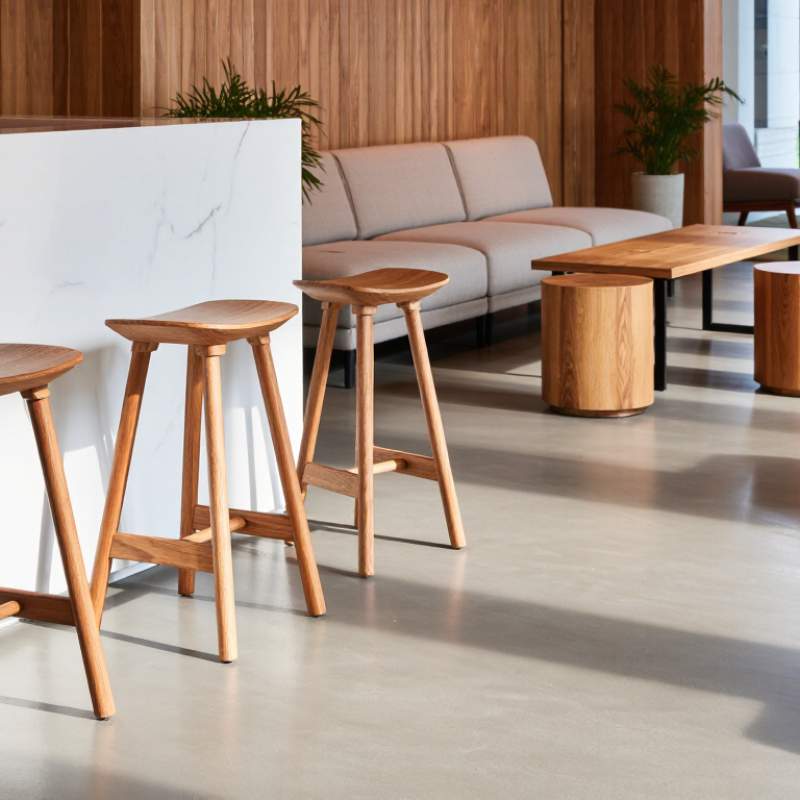
Before selecting solid wood accent stools, define where they will work and who will use them. A café counter, hotel lobby, and retail fitting area have different traffic patterns. Measure counter height, available floor space, and aisle clearance. Then check whether guests need a backrest, footrest, or easy-to-move seat. Small details matter.
The National Restaurant Association’s 2024 State of the Restaurant Industry projected $1.1 trillion in U.S. restaurant sales and 15.7 million jobs. That scale makes seating a practical operational choice, not merely a styling decision. The figures do not predict stool demand, though. Estimate peak occupancy, turnover, and cleaning frequency at your own site. A busy counter may need a stable footrest and a finish that tolerates frequent wiping; a quiet lounge may prioritize comfort and a supportive back.
Ask staff to test sample stools during normal service. Can they move them without scraping the floor? Do guests sit comfortably for the expected length of time? Check seat height against the actual counter, not a catalogue image. Solid wood can be repaired, but not every finish or joint handles rough daily use equally well. I would rethink a choice that looks perfect but feels awkward after ten minutes. That happens. Keep one sample in the space for several days, and note what staff notice.
| Business Setting | Typical Intended Use | Suggested Seat Height | Useful Seat Size | Procurement Priorities | Planning Considerations |
|---|---|---|---|---|---|
| Hotel lobby or reception area | Occasional seating, setting down bags, or pairing with a lounge chair | 17–19 in (43–48 cm) | 14–18 in (36–46 cm) diameter | Stable base, smooth edges, durable finish, and easy-to-clean surfaces | Choose a manageable weight if staff need to rearrange stools frequently. Check that the finish suits the cleaning products used on site. |
| Restaurant or café waiting area | Short-term seating while guests wait for a table | 17–19 in (43–48 cm) | 14–16 in (36–41 cm) diameter | Strong joints, a steady footprint, and a finish that can withstand frequent wiping | Allow enough circulation space around seating and keep stools clear of entrances and accessible routes. Confirm any applicable local commercial seating requirements. |
| Retail store or showroom | A brief rest spot, fitting-room seat, or display accent | 17–19 in (43–48 cm) | 13–17 in (33–43 cm) diameter | Compact footprint, easy-to-move construction, and a finish that complements the interior | Measure aisles and fitting rooms before ordering. If stools are moved often, consider protective feet to help reduce floor scratches. |
| Salon or spa | Guest seating, a waiting-area perch, or a surface for personal items | 17–19 in (43–48 cm) | 14–18 in (36–46 cm) diameter | Sealed, wipeable finish; stable construction; and surfaces compatible with the cleaning routine | Solid wood can be affected by repeated moisture exposure. Keep stools away from wet-treatment areas unless the finish and maintenance plan are suitable. |
| Office lounge or collaboration area | Informal seating, flexible meeting layouts, or occasional footrest use | 17–19 in (43–48 cm) | 15–18 in (38–46 cm) diameter | Comfortable proportions, reliable joinery, floor protection, and a finish that fits the workspace | For extended sitting, compare the stool with chairs that provide back support. Avoid treating a small accent stool as a substitute for an ergonomic work chair. |
| Bar or counter-height service area | Seating at a raised counter or bar-height table | Counter: 24–27 in (61–69 cm); bar: 28–32 in (71–81 cm) | 12–16 in (30–41 cm) diameter | Correct height for the work surface, secure construction, and a footrest where appropriate | Measure from the floor to the underside of the counter. A seat is commonly selected about 10–12 in (25–30 cm) below the work surface; confirm fit with the actual table. |
Planning note: Dimensions are general selection ranges, not product specifications. Verify actual stool measurements, stated load capacity, applicable commercial-use requirements, finish-care instructions, and return or warranty terms with the supplier before ordering.
Compare hardness, grain, and upkeep. Oak has dense wood and pronounced grain that can disguise small marks. Maple resists dents, but scratches may show clearly. Beech has a fine, steady grain.
No. Joinery and construction matter too. Check for tight joints, substantial stretchers, and reinforced footrests. Poor joints can fail despite strong wood.
Look underneath the seat for gaps or loose fittings. Sit down and shift your weight gently. Creaks, wobbling, or uneven floor contact deserve attention.
A sealed finish may be easier to wipe after spills. Ask how repairs are handled and whether replacement glides are available. No finish is maintenance-free.
Measure doorways, elevator interiors, and the full route to the room. Narrow turns can block a stool, even when it fits the floor plan.
Dust with a soft cloth and wipe spills promptly with a lightly damp cloth. Avoid harsh cleaners unless the supplier confirms they are suitable. Moisture can damage the finish.
Ask whether the quote includes inside delivery, a scheduled appointment, and packaging removal. Solid wood is heavy. These details can affect labor and installation time.
Include freight, labor, finish repairs, and replacement parts. Later stools may not match the original grain or finish exactly. A spare helps, but uses budget and storage space.
If possible, use one through a busy week and review its wear. Photos can miss weak joints. I might still underestimate how quickly staff forget routine checks.
Choosing Solid Wood Accent Stools for a business starts with understanding how and where they will be used, including expected traffic, seating needs, and the character of the space. Compare wood species for appearance and strength, and inspect construction details such as joints, support, and finish to judge whether stools can withstand regular use. Select suitable heights, shapes, and finishes so the stools are comfortable, practical, and consistent with the room’s layout and design.
Before purchasing, assess supplier communication, product consistency, pricing, and relevant safety requirements. Confirm delivery timing, packaging, and replacement-part availability, and consider how the stools will be cleaned and maintained. Looking beyond the initial purchase price to estimate upkeep and long-term replacement costs can help businesses make a more dependable choice that balances appearance, durability, and value.