Discover buying guides, renovation inspiration, smart toilet features, and expert bathroom care tips.
Choosing the right Linear Shower Drains can transform a wet room from a practical space into a clean, architectural feature. The best option depends on waterproofing, floor slope, grate design, installation access, and daily maintenance. A drain may look elegant in a showroom, yet perform poorly if its channel sits unevenly or collects hair beneath the cover.
Plumbing educator Roger Bisby offers a useful warning: “Water always finds the easiest route.” That principle matters here. Water must move quickly toward the outlet, without pooling beside the wall or under the shower screen. Stainless steel channels usually provide strong corrosion resistance and a precise appearance. Tile-insert drains can create a nearly invisible finish. However, they may require careful cutting and regular lifting for cleaning.
This guide examines the most practical types of Linear Shower Drains, including wall-to-wall, center, side, and tile-insert models. It compares their drainage capacity, installation demands, cleaning requirements, and visual impact. Real installation details matter. A slightly misplaced fall can leave a shallow puddle near the corner.
No drain is perfect.
Even premium products need accurate waterproofing and correct pipe sizing. That point is easy to overlook. In my view, the “best” drain is not always the most expensive one. It is the model that matches the room, installer, tile format, and maintenance habits. The following overview helps readers question attractive designs and choose performance before appearance.
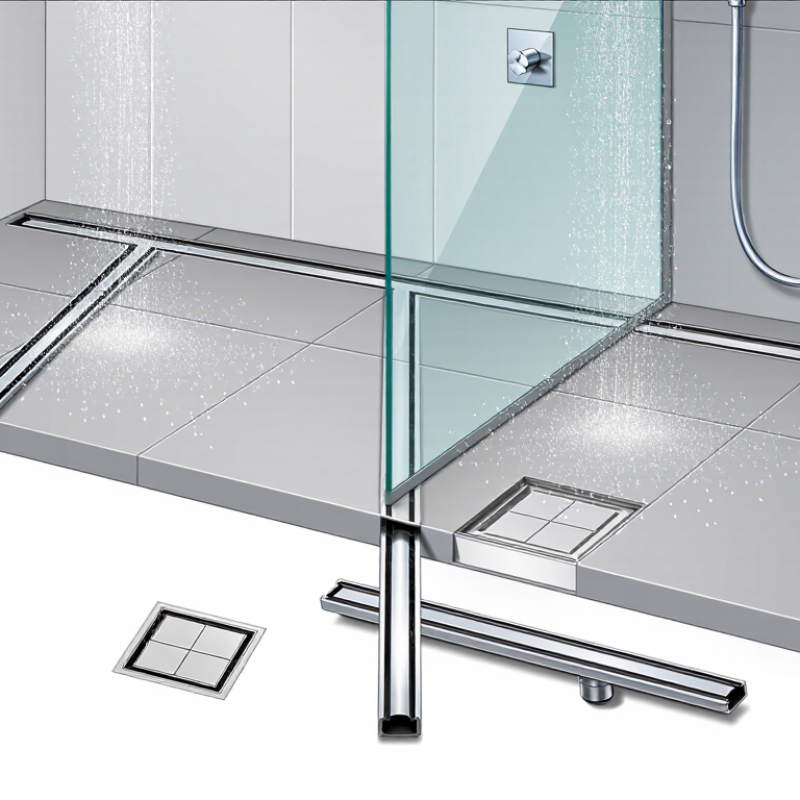
What Are the Best Types of Linear Shower Drains?
What Is a Linear Shower Drain and How Does It Work?
A linear shower drain is a long, narrow channel that collects water along one edge of the shower floor. Unlike a central drain, it needs only one continuous slope. Water moves across the tiles, enters the grate, and flows through a trap into the waste pipe. The drain body sits beneath the waterproofing layer, so installation depends on accurate sealing, not appearance alone.
The neatest drain can still fail.
Common options include wall-to-wall drains, center-positioned drains, and tile-insert covers. A wall-to-wall model suits large-format tiles and can create a clean, barrier-free entrance. However, the subfloor must be level, and the channel must have enough capacity for the shower flow. The U.S. Environmental Protection Agency’s WaterSense Specification limits certified showerheads to 2.0 gallons per minute, yet multiple outlets can exceed that flow. Drain capacity should therefore be checked before tile work begins.
The 2024 U.S. Houzz Bathroom Trends Study surveyed 1,337 homeowners and reported that 69% upgraded their showers during renovation. That demand helps explain the popularity of linear drainage. Still, design preference should not replace technical judgment. A tile-insert cover may look seamless, but hair and soap residue can hide beneath it. Removable parts matter. So does regular cleaning. Even experienced installers occasionally underestimate the slope, especially in older bathrooms with uneven floors.
How it works: A linear shower drain collects water through a long narrow channel and directs it toward a connected waste outlet. Because water flows along one plane toward the drain, the shower floor can use a single continuous slope instead of four angled surfaces.
Choosing the best type: Wall-adjacent drains are well suited to modern barrier-free showers and can simplify waterproofing near the wall. Center or offset drains provide flexible placement when the existing waste pipe is already positioned in the floor. Stainless-steel, tiled-in, and grate-top covers are appearance options; the outlet size, drainage capacity, waterproofing system, and local plumbing requirements should determine the final selection.
The chart shows the calculated vertical fall across a 1.2 m shower floor. A 2% slope equals 24 mm of fall over this distance and is a commonly used shower-floor design benchmark, although local codes and manufacturer instructions should always be checked.
Linear shower drains mainly differ by outlet position, installation location, and grate design. A center-outlet drain places the waste connection near the middle, helping water move evenly from both sides. An end-outlet model keeps the pipe connection near one wall, which can simplify renovation work. Offset outlets are useful when existing joists or pipes limit placement. They are not always the easiest choice.
Wall-to-wall drains sit tightly against one shower wall. Their long channel creates a clean floor line and works well with large-format tiles. Freestanding linear drains sit away from the wall, often near the shower entrance. These models can support more flexible layouts, but they demand accurate floor slopes on both sides. Poor grading can leave a thin puddle near the glass.
The main grate types include tile-in, slotted, and perforated covers. Tile-in grates visually blend with the floor, while slotted covers usually allow simpler cleaning. The Building Services Research and Information Association recommends checking flow capacity against fixture discharge, not appearance alone. In practice, a drain rated around 0.8 to 1.0 gallons per minute may suit many standard showers, but high-flow fixtures need greater capacity. The National Kitchen & Bath Association’s recent design research also shows continued interest in curbless showers and aging-friendly bathrooms. That trend makes outlet access, slip resistance, and maintenance more important.
Style matters. Drain performance matters more.
Linear shower drain performance depends on material, grate geometry, and installation accuracy. Stainless steel is a dependable choice because it resists moisture, cleaning chemicals, and everyday impact. Grade 304 suits most indoor bathrooms, while grade 316 offers stronger corrosion resistance in humid or coastal environments. Brass can provide strength, but its protective finish may require closer inspection over time. A beautiful surface is not enough. The drain body, outlet, and waterproofing system must work together.
Slotted grates usually offer strong water flow and make hair easier to remove. Wider slots are practical, but they can feel less comfortable under bare feet. Perforated grates create a more decorative appearance, although small openings may collect soap residue faster.
Tile-in grates create a continuous floor surface and suit minimalist bathrooms. However, their concealed channels can be less convenient to clean. I would not choose one only for appearance. Maintenance access matters more than many product photos suggest.
For regular household use, a removable stainless-steel grate with generous drainage openings is often the safest balance. Check the outlet capacity against the shower valve flow rate, especially with rain showerheads. The floor should slope evenly toward the channel, without low spots that leave shallow pools. Even quality materials cannot correct poor waterproofing or an incorrect fall. In real installations, small alignment errors cause surprising problems. Keep it practical. Aamma.
Linear shower drains are not automatically easier to maintain. Their performance depends heavily on installation quality, floor slope, and waterproofing details. The Tile Council of North America’s 2024 Handbook commonly specifies a minimum shower-floor slope of 1/4 inch per foot. That slope guides water toward a linear channel instead of leaving shallow puddles near the wall.
Two installation methods appear frequently: a traditional mortar bed and a bonded waterproofing system. Mortar beds can correct uneven substrates, but poor compaction may create movement and cracked grout. Bonded systems are thinner and can simplify transitions, especially in curbless showers. They demand precise substrate preparation, though. A small dip beside the drain can hold soap water for hours.
Placement also affects cleaning. A wall-to-wall drain usually allows one continuous slope, while a shorter drain requires more complex falls from several directions. According to EN 1253-1 testing principles, drainage components are assessed for flow performance and access for cleaning. That access matters. Choose a removable grate and inspect the hair trap regularly. Do not bury the service point under tile.
The U.S. Environmental Protection Agency’s WaterSense criteria limit certified showerheads to 2.0 gallons per minute, compared with the federal 2.5-gallon maximum. Lower flow reduces peak discharge, but it cannot compensate for blocked outlets or poor slope. I have seen projects focus on appearance first. That is where maintenance problems often begin.
Choosing the best linear shower drain starts with your bathroom’s structure, not its appearance. A wall-side drain works well with large tiles and creates a cleaner floor pattern. A center drain suits square or rectangular shower areas. I have found that the drain’s position affects installation time more than expected. Measure twice. The drain should match the finished shower width, allowing space for waterproofing and edge adjustments. A small mismatch can create weak joints or uneven tile cuts.
Check the shower’s slope requirements before selecting a model. Water should move smoothly toward the outlet without leaving shallow puddles. A wide channel may handle heavy flow, but pipe size and floor height still matter. Stainless steel usually offers strong corrosion resistance and a stable surface. However, material quality can vary. Do not judge by appearance alone. Look for a removable cover, accessible hair trap, and smooth internal surfaces. These details make routine cleaning less unpleasant.
Tile compatibility also deserves attention. Some drains accept the same tile used on the floor, while others use a visible grate. A tile insert can look discreet, but it may need careful cutting and regular lifting. A grate is often easier to clean and inspect. For older users or anyone with limited movement, a flush design can reduce tripping concerns. I once underestimated maintenance access, and the finished result looked good but was frustrating to service. Ask the installer to confirm waterproofing layers, slope, outlet location, and cleaning access before the drain is fixed in place.
It is a long, narrow channel along one shower edge. Water crosses the floor and enters the drain.
The shower floor slopes toward one continuous channel. Water then passes through a trap and enters the waste pipe.
A common guideline is a 1/4-inch slope per foot. Without enough slope, shallow puddles may remain.
A wall-side drain often works well with large tiles. It can create a cleaner, barrier-free entrance.
Not always. Multiple outlets may exceed the drain’s flow capacity, even when each outlet seems modest.
Not automatically. Hair and soap can collect beneath tile-insert covers, especially when access is limited.
Choose a removable cover, accessible hair trap, and smooth internal surfaces. Inspect the trap regularly.
A mortar bed can correct uneven substrates. Poor compaction, however, may cause movement and cracked grout.
Confirm the finished width, waterproofing layers, slope, outlet location, and cleaning access. Measure twice.
No. A seamless cover may look excellent but become frustrating to service. I once underestimated this detail.
Linear Shower Drains offer a sleek and practical alternative to traditional central drains, using a long, narrow channel to collect and direct water toward the plumbing outlet. Their design can support larger tiles, create a more open visual effect, and improve accessibility when properly installed. Common types include wall-to-wall, center, and corner models, each suited to different bathroom layouts and slope requirements. The best choice depends on the shower’s size, position, and desired appearance.
Material and grate design also affect durability, drainage efficiency, and cleaning. Stainless steel and other corrosion-resistant materials generally provide reliable long-term performance, while removable grates and easy-access channels simplify maintenance. Installation methods, including placement, waterproofing, tile slope, and connection to the waste pipe, are essential for preventing standing water and leaks. To choose the best Linear Shower Drains, consider flow capacity, dimensions, grate style, cleaning access, installation conditions, and compatibility with the bathroom’s overall design.