Discover buying guides, renovation inspiration, smart toilet features, and expert bathroom care tips.
Choosing the best type of LED Bathroom Mirrors is not simply a matter of picking the brightest model. A mirror may look impressive online, yet feel harsh in a small bathroom. The right choice depends on lighting quality, room size, humidity, installation, and daily habits.
In my experience, a useful mirror should provide clear reflection without making skin tones appear strangely pale. Look for high color rendering, adjustable brightness, and a warm-to-cool color range. Anti-fog heating helps after a hot shower. It can also prevent the familiar problem of wiping steam away with a towel. Check the product’s moisture-resistance rating and follow the installation instructions carefully. A qualified electrician should handle hardwired models.
The “best” option still varies from home to home. A compact bathroom may suit a slim, wall-mounted mirror with front lighting. A larger space may benefit from side illumination and stronger brightness. Touch controls can feel modern, but wet fingers may make them less responsive. That detail is easy to overlook. Reliable brands should provide clear specifications, warranty terms, safety information, and replacement guidance. Independent reviews can help, though they are not always perfectly objective.
This guide compares the main types of LED Bathroom Mirrors and explains where each model performs well. It also considers practical weaknesses, because even a stylish mirror can disappoint. Good design matters, but safe installation and comfortable everyday use matter more.
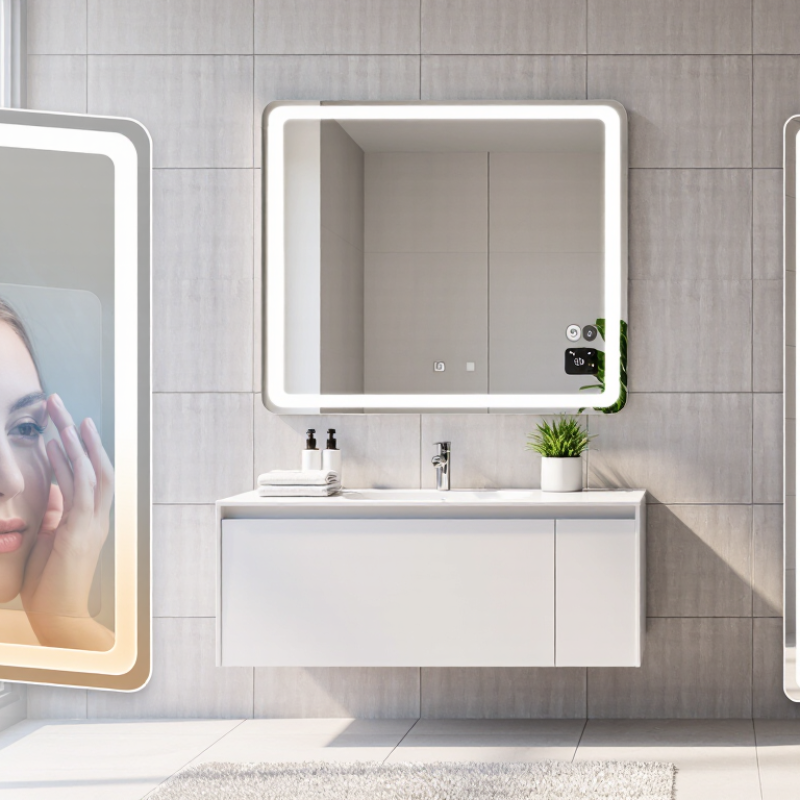
What Is the Best Type of LED Bathroom Mirror?
LED bathroom mirrors differ mainly in light placement, brightness, control, and extra functions. Backlit mirrors shine light behind the glass, creating a soft halo around the wall. They suit calm, modern bathrooms but may not light the face evenly. Edge-lit mirrors use LEDs around the glass perimeter. They are usually slim and energy-efficient, although the illumination can feel less powerful. Front-lit mirrors direct light toward the user. They are often better for shaving, skincare, and makeup because they reduce shadows under the eyes and chin.
From inspecting bathroom installations, I find front-lit designs most practical for daily grooming. Still, the best type depends on the room. A small bathroom may benefit from a backlit mirror because its gentle glow adds depth without harsh glare. A larger room may need stronger front lighting. Dimmable controls and adjustable color temperature also matter. Warm light feels relaxing, while neutral white light shows skin details more accurately.
Anti-fog heating is useful after a hot shower, but heating performance varies between models. Check the heated area, switch location, and warm-up time. A mirror can look perfect in a showroom and disappoint at 7 a.m. I once noticed a beautiful edge-lit mirror leaving the face too dark near a window. Electrical connections should follow local requirements and be handled by a qualified professional. Also check the bathroom’s moisture rating, installation space, and wall strength before choosing.
LED bathroom mirrors use different lighting layouts, and each type creates a different lighting effect. The chart compares the typical lighting characteristics of the four main designs. A value of 1 means the feature is inherent to the design, while 0 means it is not normally built into that type.
Front-lit mirrors are generally best for clear facial lighting. Back-lit mirrors create a soft wall-wash effect and a floating appearance. Edge-lit mirrors use perimeter illumination for a slim, modern look. Dual-lit mirrors combine front and rear lighting for both practical illumination and ambient atmosphere. Actual brightness, color rendering, and energy use depend on the LED density, diffuser, color temperature, and product construction.
A high-quality LED bathroom mirror should provide clear reflection, balanced lighting, and dependable daily performance. In my experience, color accuracy matters more than dramatic brightness. Choose LEDs with a high color rendering index, ideally 90 or above. This helps skin tones, makeup shades, and shaving details look more natural. Adjustable color temperature is useful too. Warm light feels gentle at night, while neutral white light supports grooming. A mirror with smooth dimming is preferable to one with only harsh on-and-off settings.
Moisture protection is essential in a bathroom. Check the mirror’s IP rating and confirm that it suits your installation area and local electrical requirements. A sealed edge, protected wiring, and safety-backed glass can reduce practical risks. Anti-fog heating is another valuable feature, especially after a hot shower. It should clear the central viewing area without creating distracting hot spots. Touch controls look modern, but they may respond poorly with wet fingers. I once chose appearance over usability. That was a mistake.
Tips: Measure the wall and outlet position before buying. Test the mirror at eye level, not only on a showroom wall. Look for even light around the face, without dark corners or glare. Ask how easily the LED system can be serviced. A long warranty is helpful, but clear installation instructions matter more. If wiring is needed, use a qualified electrician. A beautiful mirror is not enough when its light feels cold, uneven, or difficult to control.
The best LED bathroom mirror depends on how accurately it shows your face, not how many features it offers. When comparing lighting, check brightness, color rendering, and beam direction. A high color rendering index helps reveal natural skin tones and makeup shades. Adjustable color temperature is useful too. Warm light feels relaxing, while cooler light supports shaving and detailed grooming. Test the mirror at eye level. Harsh glare can make a bright mirror uncomfortable.
Glass quality deserves equal attention. Look for clear, distortion-free glass with consistent silvering across the surface. Stand about one meter away and check whether straight tiles appear straight. Slight waviness may seem minor, but it becomes annoying during daily use. A heated anti-fog pad can keep the center clear after a hot shower. However, heating performance depends on coverage. Some mirrors clear only a small viewing area.
Smart functions should solve real problems. Touch controls, dimming memory, motion sensors, and Bluetooth audio can improve convenience. Voice control sounds impressive, but bathroom humidity and wet hands may reduce its practicality. I once prioritized extra features over lighting quality, and that choice felt wrong every morning. Check the control response, wiring method, and suitable ingress protection rating. Electrical installation should follow local safety requirements and use a qualified professional when needed. More technology is not always better.
| Comparison Area | Basic LED Mirror | Backlit LED Mirror | Front-Lit LED Mirror | Premium Smart LED Mirror |
|---|---|---|---|---|
| Lighting Position | LEDs are usually placed behind the mirror or around its rear perimeter. Light is mainly decorative and provides soft ambient illumination. | LEDs shine toward the wall and create a halo effect around the mirror. The reflected wall light can make the bathroom feel brighter without harsh glare. | LEDs illuminate the face from the front or through a translucent section of the glass. This design generally provides more useful task lighting. | Combines front lighting, backlighting, or both, often with touch or sensor controls and adjustable brightness. |
| Best Use | Small bathrooms, guest bathrooms, and decorative upgrades where basic illumination is sufficient. | Relaxed ambient lighting and contemporary bathroom designs. | Shaving, skincare, makeup, hair styling, and other face-level tasks. | Bathrooms where convenience, adjustable lighting, defogging, and integrated technology are priorities. |
| Typical Color Temperature | Commonly fixed at approximately 3,000–6,500 K, depending on the model. | Often available in warm white, neutral white, or cool white versions; adjustable models provide greater flexibility. | Neutral white around 4,000 K is generally comfortable for grooming, while adjustable models may cover approximately 3,000–6,500 K. | Usually offers selectable or continuously adjustable color temperature, commonly from warm white to daylight ranges. |
| Color Rendering | Quality varies. A CRI of 80 or higher is a practical minimum for general bathroom use. | CRI is often more important than the halo effect. A CRI of 90 or higher gives more natural-looking skin and cosmetic colors. | A CRI of 90 or higher is preferred for accurate facial and makeup color evaluation. | Look for a published CRI rating of 90 or higher; adjustable color temperature does not automatically mean accurate color rendering. |
| Brightness Control | Frequently offers simple on/off operation, with limited or no dimming. | May include touch dimming, but the available brightness range depends on the LED driver and control system. | Usually benefits from dimming because task lighting can otherwise feel too bright at close range. | Commonly includes memory settings, touch controls, motion sensors, or app-based adjustment. Controls should remain usable with wet hands only when specifically designed for that purpose. |
| Mirror Glass | Standard silver-backed mirror glass is suitable when the surface is flat, clear, and properly sealed. | Uses standard mirror glass with a rear gap, cutout, or mounting structure to create the illuminated edge. | Often uses etched, frosted, or translucent sections to diffuse light. Uniform diffusion helps reduce visible LED points. | May use high-clarity glass with etched lighting zones. The glass should still provide a sharp, distortion-free reflection across the full surface. |
| Anti-Fog Performance | Usually not included unless specified separately. | Optional. Backlighting alone does not prevent condensation on the mirror surface. | Often available as a separate heated pad or integrated defogging area. It requires additional electrical power. | Commonly includes a dedicated defogger with an independent switch or timer. A timer can reduce energy use and unnecessary heat. |
| Energy Efficiency | LEDs generally use less electricity than traditional incandescent lighting, but total consumption depends on size and operating time. | Typically efficient for ambient lighting because the LED system can use relatively low wattage. | May use slightly more power than decorative backlighting when designed for stronger face illumination. | Lighting, heating pads, displays, speakers, and sensors can increase total wattage. Check the rated input power rather than judging by features alone. |
| Installation Requirements | May be hardwired or connected with a suitable plug, depending on local electrical rules and the product design. | Requires adequate wall clearance for the rear light and a correctly positioned electrical connection. | Needs careful positioning so the lighting is centered at face level and does not create strong shadows. | Requires planning for power, ventilation, wall support, Wi-Fi or Bluetooth setup if applicable, and safe access to electrical components. |
| Bathroom Safety | Choose a product with a clearly stated bathroom-suitable ingress protection rating and follow local wiring regulations. | Rear illumination does not make an electrical product automatically waterproof. The enclosure and installation location must be rated appropriately. | Front-facing light areas should be sealed against normal bathroom humidity, with no exposed electrical contacts. | All electrical and electronic functions should be enclosed and certified for the intended bathroom zone. Professional installation is recommended for hardwired units. |
| Smart Functions | Usually limited to a touch switch or simple power button. | May include touch control, dimming, and color-temperature adjustment. | May include touch controls, memory brightness, defogging, and sometimes a digital clock. | May include motion activation, adjustable lighting, defogging, clock or temperature display, Bluetooth audio, USB charging, and app or voice integration. Features vary substantially by model. |
| Main Advantages | Simple operation, lower feature complexity, and generally easier maintenance. | Attractive wall-wash effect, soft atmosphere, and a clean floating appearance. | Better illumination for facial tasks and more practical daily grooming. | Maximum convenience and customization when the extra controls and maintenance are worthwhile. |
| Potential Limitations | May create shadows on the face and may not be bright enough for detailed grooming. | Light can be indirect and less effective for shaving or makeup. The wall color and distance behind the mirror affect the halo appearance. | Poorly diffused LEDs can produce bright spots or glare. Incorrect placement may still create shadows. | Higher purchase cost, more electronic components, more complicated installation, and potentially higher repair costs. |
| Best Overall Choice | Choose this type for straightforward decorative lighting and a lower-complexity setup. | Choose this type when ambient style and a soft halo effect matter most. | Choose this type for most everyday grooming needs, especially with CRI 90+, dimming, and even light diffusion. | Choose this type when you will regularly use the smart controls, defogger, and adjustable lighting rather than selecting features only for appearance. |
Selection note: For most bathrooms, a front-lit or combined front-and-backlit mirror with CRI 90 or higher, adjustable brightness, even diffusion, a suitable bathroom ingress-protection rating, and a properly installed defogger offers the best balance of function and comfort.
A good LED bathroom mirror begins with electrical safety, not brightness or extra features. Low-voltage LEDs reduce energy use, but they do not remove shock risks. NFPA’s Home Structure Fires report recorded about 374,300 home structure fires in the United States in 2022. Electrical failures were only one cause, yet bathrooms remain demanding spaces because water and electricity are close together.
Choose a mirror with a documented ingress-protection rating. Under IEC 60529, IP44 resists splashing water from common directions, while higher ratings offer stronger protection. However, an IP rating is not a magic shield. The rating must match the mirror’s installation position and local electrical rules. A qualified electrician should connect hardwired models to a GFCI-protected circuit. NFPA 70 requires GFCI protection for many bathroom receptacles in dwellings, but local authorities may impose additional requirements.
The safest design usually has sealed wiring, an enclosed LED driver, and a switch positioned away from wet areas. Check certification from a recognized testing body, clear installation instructions, and the required bathroom-zone clearance. Avoid placing the mirror directly above a shower unless its rating and local code permit it. Anti-fog heating is useful, but it adds another electrical load. That detail is easy to overlook. I would also inspect the cable entry and wall seal after installation, because small gaps can become serious problems over time. NFPA’s figures describe homes generally, not LED mirrors specifically, so they should guide caution rather than create false certainty.
Choosing the best LED bathroom mirror starts with your daily routine, not its appearance. A makeup user may need bright, even lighting with a high color rendering index. Someone shaving may prefer shadow-free light around the face. Measure the wall carefully before shopping. A mirror that looks elegant online can feel oversized above a narrow basin.
Consider adjustable color temperature, from warm evening light to cooler morning illumination. Dimmable controls are useful when bright light feels harsh. Check the stated lumen output, because decorative LEDs may not provide enough brightness for grooming. An anti-fog function also helps after a hot shower. I have found that small details, such as touch controls and memory settings, matter more than expected.
Bathroom safety requires closer attention. Choose a mirror with suitable moisture protection, and follow local electrical requirements. Hardwired models should be installed by a qualified professional. Review the installation instructions before drilling, especially when pipes or cables may run behind the wall. A thin frame saves space, but it may offer less storage or fewer lighting options. My first choice was based too heavily on appearance, and the light proved uneven. Sometimes, a simpler mirror with better illumination is the more practical decision.
Front-lit mirrors usually provide the most even light for shaving, skincare, and makeup. They reduce shadows beneath the eyes and chin. However, room size still matters.
Backlit mirrors create a soft halo behind the glass. They suit smaller bathrooms and calm interiors. Edge-lit mirrors place LEDs around the perimeter and usually have slimmer profiles. Their light may feel weaker.
High color accuracy helps skin tones and makeup shades look more natural. Look for a color rendering index of 90 or above. Brightness alone can mislead you.
Yes. Dimming helps when strong light feels harsh at night. Warm light feels relaxing, while neutral white light shows facial details more clearly. Smooth controls are better than sudden on-and-off settings.
It can clear the central viewing area after a hot shower. Check its heating area and warm-up time. Performance varies. A mirror may still leave its edges foggy.
Measure the wall, basin, and available installation space first. Check the outlet position before buying. An elegant mirror can look oversized above a narrow basin. Measure twice.
Confirm that the moisture protection suits the installation area. Review local electrical requirements and wall strength. Hardwired models should be installed by a qualified electrician. Do not drill blindly near hidden pipes or cables.
Touch controls look clean and modern. Wet fingers may make them respond poorly. Dimmable controls and memory settings can be useful, but appearance should not decide everything. I once chose style first, and regretted it.
Choosing the best LED Bathroom Mirrors depends on understanding the different styles and the features that matter most in daily use. Some models provide front lighting, backlighting, or a combination of both, while others include adjustable brightness and color temperature settings. A high-quality mirror should offer clear, distortion-free glass, even illumination, reliable controls, and durable materials that can withstand a humid bathroom environment. Smart functions, such as touch controls, memory settings, or built-in anti-fog heating, may also improve convenience when they are designed for simple and dependable use.
Safety and installation should be considered before making a decision. The mirror must be suitable for bathroom conditions, properly protected from moisture, and installed with secure electrical connections by a qualified professional when required. To choose the right option, compare the mirror’s size, lighting performance, glass quality, functions, energy use, and installation requirements with your room’s layout and style. The best choice is one that combines comfort, visibility, safety, durability, and practical features without adding unnecessary complexity.