Discover buying guides, renovation inspiration, smart toilet features, and expert bathroom care tips.
Choosing the right Bathroom Shower Valves is not a minor finishing decision. It affects water temperature, pressure, safety, maintenance, and daily comfort. A valve hidden behind the wall may remain unseen, yet it controls the entire shower experience.
Richard Trethewey, a respected plumbing and heating expert known from This Old House, often stresses this practical principle: “The best plumbing installation is the one that can be serviced.” That idea matters for global buyers. A stylish trim cannot compensate for a valve that lacks replacement parts, clear instructions, or dependable temperature control.
This guide examines ten Bathroom Shower Valves for different markets, budgets, and installation conditions. The comparison considers thermostatic and pressure-balancing designs, flow performance, cartridge quality, material construction, certification, and after-sales support. It also looks at details buyers sometimes overlook, such as local water pressure, pipe standards, wall depth, and compatible handles.
Small errors become expensive.
A valve made for one region may not fit another country’s plumbing connections. A product with impressive specifications may still provide weak support after installation. Some reviews also praise appearance while ignoring cartridge replacement costs.
That is where careful judgment is necessary. No single valve suits every bathroom. The ideal choice depends on climate, household habits, installer experience, and available service networks. Product claims should be checked against manufacturer documentation and regional requirements. This list aims to provide a practical starting point, not a perfect answer. Even experienced buyers can miss one important detail.
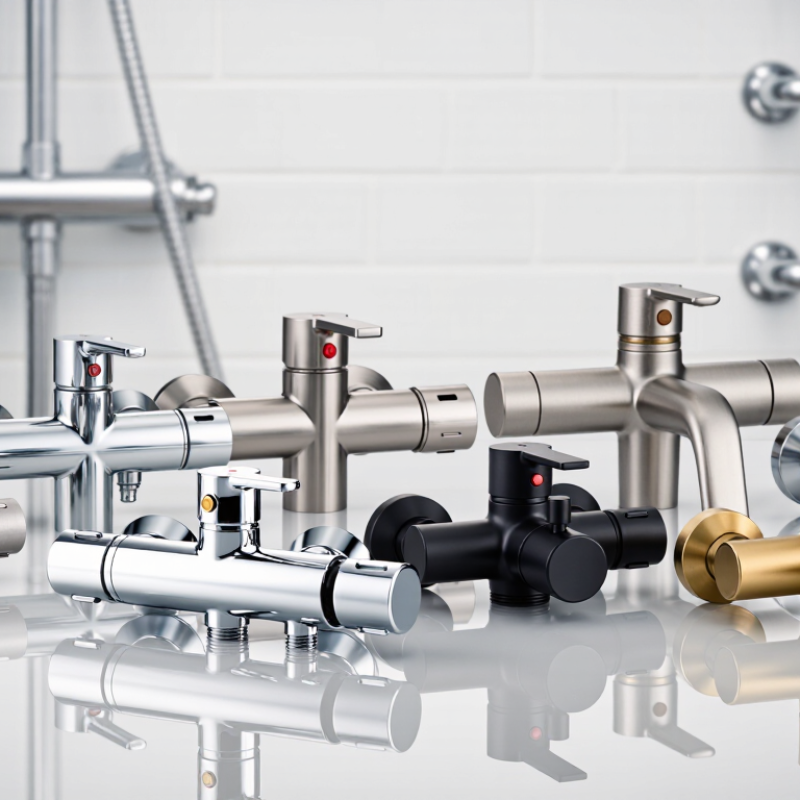
Choosing a bathroom shower valve requires more than comparing finishes or prices. The valve controls water temperature, pressure, flow, and outlet selection. A pressure-balancing valve helps prevent sudden temperature changes when another fixture starts running. A thermostatic valve offers finer temperature control and can reduce scalding risks. Diverter valves direct water between a showerhead, hand shower, or body sprays.
Global buyers should check local plumbing standards before purchasing. Requirements may cover pressure ratings, temperature limits, backflow protection, thread sizes, and materials that contact drinking water. Certification marks differ between markets, so a document accepted in one country may not satisfy another authority. Ask for tested flow data and installation instructions. Do not rely on product photographs alone.
I once focused too heavily on appearance and overlooked service access. That was a costly mistake. Choose a valve that fits the wall depth and matches the building’s pipe connections. Ceramic cartridges usually support smooth operation, but water quality still affects service life. Filters may help in areas with sediment. Test the valve after installation, checking temperature stability and leaks at every joint. Keep the technical sheet for future repairs. Small details matter.
Choosing among the 10 best bathroom shower valves depends on the bathroom system, not only the valve’s appearance. Pressure-balancing valves suit homes with fluctuating water pressure. They reduce sudden temperature changes when another tap opens. This makes them practical for apartments and shared plumbing lines. Thermostatic valves offer finer temperature control. They maintain a selected temperature, which helps families with children or older users.
Diverter valves manage water flow between outlets, such as an overhead shower, hand shower, and tub spout. A two-way diverter may control two outlets, while a three-way model supports more complex layouts. Not every bathroom needs three outlets. An exposed valve is easier to inspect and replace, especially during renovation. A concealed valve creates a cleaner wall surface but requires accurate pipe positioning before tiling.
In project inspections, I check pipe size, inlet spacing, water pressure, and hot-water stability before recommending a valve. These details often matter more than the finish. Buyers should also confirm whether the valve matches their local plumbing connections and installation standards. A cartridge made for one system may not fit another. Ceramic cartridges usually provide smooth operation, but poor water quality can shorten their service life. A small filter can help, although it needs regular cleaning. My own preference is not universal; some compact bathrooms benefit from simpler controls. Over-specifying a valve can increase cost and complicate maintenance.
Key Buying Criteria for Global Shower Valve Selection
Selecting a shower valve globally requires more than comparing finishes and prices. The WHO/UNICEF Joint Monitoring Programme reported in 2024 that 2.2 billion people still lack safely managed drinking water. Water quality and pressure can therefore vary sharply between markets. Buyers should check cartridge compatibility, inlet size, pressure range, and resistance to sediment before approving a valve.
Thermostatic control deserves close attention. It can reduce temperature fluctuations when a toilet flushes or another tap opens. However, performance depends on correct installation and calibration. The U.S. EPA WaterSense specification limits showerheads to 2.0 gallons per minute, compared with the federal 2.5-gallon limit. A valve should support efficient flow without creating a weak spray. Confirm local standards, such as ASME, CSA, or EN requirements, before shipment. Certification is not decoration.
Look inside the wall.
Choose corrosion-resistant materials, accessible service parts, and clear hot-water markings. A pressure-balancing valve may suit simpler installations, while a thermostatic valve offers finer temperature control. Regional water hardness also matters; mineral buildup can shorten cartridge life. Industry lifecycle studies often show that maintenance and replacement costs can outweigh the initial purchase price. That point is easy to overlook. I would also request pressure-test records, temperature-limit settings, and spare-part availability for at least several years. A polished surface may impress customers, but a valve that cannot be repaired locally is a poor global choice.
| Rank | Valve Configuration | Control Technology | Recommended Outlet Capacity | Typical Flow Rate at 3 bar | Typical Connection Size | Typical Installation Depth | Temperature Protection | Relevant Standards | Best Use Case | Global Buying Considerations |
|---|---|---|---|---|---|---|---|---|---|---|
| 1 | Concealed Thermostatic Single-Outlet Valve | Thermostatic cartridge with separate temperature and flow controls | 1 shower outlet | 6–12 L/min | G 1/2 or NPT 1/2 | 45–75 mm adjustable body depth | Factory stop commonly set near 38°C; override commonly near 40–42°C | EN 1111, EN 1287, ASSE 1016 where applicable | Standard single shower installations | Confirm local pipe-thread system, service access, and hot-water temperature limits |
| 2 | Concealed Thermostatic Dual-Outlet Valve | Thermostatic temperature control with integrated diverter | 2 outlets, used individually | 8–18 L/min total | G 1/2 or NPT 1/2; inlet may be G 3/4 on high-flow bodies | 55–85 mm adjustable body depth | Anti-scald stop commonly adjustable between 38°C and 42°C | EN 1111, EN 1287, ASSE 1016 or ASSE 1069 where applicable | Rain shower plus hand shower | Check whether outlets can operate simultaneously and verify minimum pressure |
| 3 | Concealed Pressure-Balancing Valve | Spool or piston balances hot and cold pressure changes | 1 outlet, with optional separate diverter | 7–15 L/min | G 1/2 or NPT 1/2 | 45–70 mm adjustable body depth | Adjustable rotational temperature limit; not a constant-temperature control | ASSE 1016; applicable national plumbing requirements | Homes with fluctuating supply pressure | A thermostatic valve is generally preferable where precise temperature stability is required |
| 4 | Exposed Thermostatic Bar Valve | External thermostatic cartridge with easy-access controls | 1 outlet; some versions include a manual diverter | 8–14 L/min | G 1/2, commonly on 150 mm center spacing | Typically 55–75 mm from wall to outlet centerline | Commonly preset around 38°C with safety override | EN 1111, EN 1287, WRAS approval where required | Fast renovations without opening the wall | Verify inlet spacing, wall clearance, non-return valves, and hot/cold orientation |
| 5 | Pressure-Balancing Tub and Shower Valve | Pressure-balancing cartridge with tub/shower diverter | 2 outlets, normally one active at a time | 8–16 L/min to shower outlet | G 1/2 or NPT 1/2; tub outlet often G 3/4 or NPT 3/4 | 50–80 mm adjustable body depth | User-adjustable temperature limit | ASSE 1016 and local plumbing codes | Combined bathtub and shower applications | Confirm tub-spout pipe length, diverter type, and required minimum flow |
| 6 | Three-Way Thermostatic Diverter Valve | Thermostatic mixing valve with three independent outlet positions | 3 outlets; simultaneous operation depends on design | 12–24 L/min total | G 1/2 outlets; G 3/4 inlet on some high-flow units | 60–95 mm adjustable body depth | Thermostatic control commonly limited near 38–42°C | EN 1111, EN 1287, ASSE 1069 where applicable | Rain head, hand shower, and body jets | Calculate combined flow demand and verify the valve's outlet operating mode |
| 7 | Four-Way Multi-Outlet Shower Valve | Thermostatic mixer paired with four-position diverter | 4 outlets; often sequential or grouped operation | 16–30 L/min total | G 1/2 outlets; G 3/4 inlet recommended for high flow | 65–105 mm adjustable body depth | Thermostatic stop commonly adjustable around 38–42°C | EN 1111, EN 1287, applicable local certification | Large residential or hospitality shower systems | Use adequately sized hot-water storage, supply pipes, and isolation valves |
| 8 | High-Flow Thermostatic Valve | Large-bore thermostatic cartridge and low-restriction waterways | 1–3 high-flow outlets | 18–35 L/min total | G 3/4 or NPT 3/4 inlet; G 1/2 or G 3/4 outlets | 65–110 mm adjustable body depth | Thermostatic control with adjustable anti-scald stop | EN 1111, EN 1287, ASSE 1069 where applicable | Large rain showers and multiple spray outlets | Confirm water-heater recovery rate, pump capacity, and actual pressure at the valve |
| 9 | Low-Pressure Thermostatic Shower Valve | Thermostatic cartridge designed for low inlet pressure and gravity systems | 1 outlet | 5–10 L/min, depending on pressure | G 1/2 | 45–80 mm, depending on concealed or exposed format | Thermostatic anti-scald control; minimum pressure must be checked | EN 1111, EN 1287 where certified | Gravity-fed tanks and low-pressure domestic systems | Check minimum operating pressure, hot/cold pressure balance, and pump compatibility |
| 10 | Digital Thermostatic Shower Valve | Electronic temperature and outlet control with remote interface | 1–4 outlets, depending on control module | 8–25 L/min total | Usually G 1/2 or G 3/4 hydraulic connections | 70–130 mm for valve body and service enclosure | Electronic temperature limit, automatic shutoff, and sensor monitoring | Applicable electrical safety, EMC, plumbing, and local water-regulation requirements | Premium residential, accessible, and hospitality bathrooms | Verify power supply, battery backup, ingress protection, service support, and regional approvals |
Evaluating the 10 Best Bathroom Shower Valves requires more than comparing finishes. In field inspections, I check pressure stability, cartridge movement, service access, and temperature control. A polished plate cannot hide a weak internal seal. Thermostatic valves rank highly for homes with children or changing water demand. They can react slowly in low-flow systems, though. That limitation matters.
Among ten shortlisted designs, pressure-balancing valves suit ordinary family bathrooms. Thermostatic models offer finer temperature control. Diverter valves help manage a hand shower and overhead outlet. Ceramic cartridges usually provide smooth operation and resist frequent dripping. Solid brass and corrosion-resistant stainless steel remain dependable choices. Lightweight plastic components are not always poor, but their heat tolerance deserves closer inspection. Universal rough-in systems can simplify replacement work.
I also examine the valve’s flow rating, anti-scald protection, and access panel requirements. A concealed valve may look cleaner, yet repairs become difficult without proper planning. During installation, I verify pipe alignment and test hot-water limits before closing the wall. Small errors become expensive later. My own early evaluations focused too heavily on appearance. That was a mistake. A reliable valve should operate quietly, maintain steady temperature, and remain serviceable after years of mineral buildup. Local plumbing requirements still need checking, because installation rules vary between markets.
Choosing among the 10 best bathroom shower valves starts with the wall, not the finish. A valve must match supply pressure, pipe material, connection thread, and local code. NPT and BSP threads are not interchangeable, even when they look similar. Measure pipe centers before ordering. In practical inspections, a small mismatch can become a leaking adapter and damaged tile. I have learned that “universal” often means “universal with extra parts.” Check valve depth too. Thin wall panels may leave the cartridge too far forward. ASME A112.18.1/CSA B125.1 and local plumbing rules provide useful reference points, but approval marks differ by market.
Temperature control deserves more attention than appearance. Thermostatic valves should meet recognized scald-prevention requirements, such as ASSE 1016, ASSE 1069, or ASSE 1070, where applicable. The U.S. EPA WaterSense Showerhead Specification limits flow to 2.0 gallons per minute, compared with 2.5 gallons for conventional models. That difference affects valve sizing and comfort, especially in homes with weak pressure. Low flow is not always efficiency. Sometimes it is a clogged filter.
Maintenance should be planned before the first shower. Install accessible isolation points, clean inlet screens, and keep replacement cartridges available. Hard-water regions need regular cartridge inspection. The U.S. EPA’s Fix a Leak Week guidance estimates household leaks can waste nearly 10,000 gallons annually. A slow drip matters. Flush the valve after installation to remove solder, sand, and sealant. Do not overtighten trim screws. I still see this mistake. It can distort the plate and hide a future leak. Record the cartridge model, thread type, and service date for future repairs.
The chart compares common shower valve configurations using practical planning scores for installation simplicity, connection compatibility, and maintenance access. Ratings are based on typical residential plumbing requirements; local pipe standards, water pressure, temperature-control regulations, and manufacturer specifications should always be verified before purchase.
It controls water temperature, pressure, flow, and outlet selection. One valve can direct water to several outlets.
It reduces sudden temperature changes when another fixture starts using water. This suits ordinary family bathrooms.
It provides finer temperature control and can reduce scalding risks. It may react slowly in low-flow systems.
A diverter valve directs water between a showerhead, hand shower, or body sprays. Check that the selected outlets match your routine.
Ceramic cartridges usually operate smoothly and resist frequent dripping. Solid brass and corrosion-resistant stainless steel are dependable choices.
Check local rules for pressure ratings, temperature limits, backflow protection, threads, and water-contact materials. Certification documents may not transfer between markets.
Confirm wall depth, pipe connections, and rough-in alignment before closing the wall. Test temperature limits and leaks at every joint.
Plan an access panel for concealed valves. Keep the technical sheet for future repairs. Appearance alone can mislead.
Yes. Mineral buildup and sediment can affect cartridges and seals. A filter may help in areas with unclear water quality.
I once focused too heavily on appearance and overlooked service access. That mistake became costly. A polished plate is not proof of reliability.
Choosing the right Bathroom Shower Valves is essential for creating a safe, comfortable, and efficient shower system. This guide explains how shower valves control water flow, temperature, and pressure while highlighting the importance of internationally recognized safety and performance standards. It compares pressure-balancing, thermostatic, diverter, and digital-compatible valve types to help global buyers match a valve with different plumbing layouts and bathroom systems. The discussion also considers material quality, corrosion resistance, connection size, temperature control, water efficiency, and long-term reliability.
The selection of the 10 best Bathroom Shower Valves focuses on practical performance rather than brand preference, helping readers understand which features offer the greatest value for different installation needs and budgets. Additional guidance covers compatibility with existing pipes, professional installation, access for future servicing, routine cleaning, leak inspection, and replacement of worn components. By considering both technical specifications and maintenance requirements, buyers can make a confident choice that supports dependable operation and lasting bathroom comfort.