The best Bathroom Robe Hooks in 2026 are not simply the most polished ones. They need to feel steady under a damp robe, fit the available wall space, and suit the room’s daily routine. A hook beside the shower may save a wet robe from the floor. One behind the door may keep a narrow bathroom feeling less crowded. Small details matter.
For a practical design perspective, consider this clearly illustrative comment from fictional bathroom hardware specialist Maya Chen: “A good robe hook should hold securely, shed water easily, and sit where your hand naturally reaches.” This is an original editorial line, not a quotation from a verifiable industry source. That distinction matters. Real-world choices still depend on wall material, mounting method, robe weight, and household use. A sleek adhesive hook may work well on smooth tile, but not every surface provides a reliable bond. A screw-mounted option can feel more reassuring, though installation takes more effort. There is no perfect answer for every bathroom.
This guide compares Bathroom Robe Hooks by material, mounting style, load support, finish, and ease of cleaning. It also considers how hooks look against pale tile, brushed metal fixtures, and painted walls. Expect useful trade-offs, not a universal winner. Before choosing, check the product’s installation instructions and the surface where it will go. A beautiful hook is still a poor choice if it loosens after a few weeks.
What Defines a Bathroom Robe Hook and Its Core Functions in 2026?
What Are the Best Bathroom Robe Hooks in 2026?
What Defines a Bathroom Robe Hook and Its Core Functions in 2026?
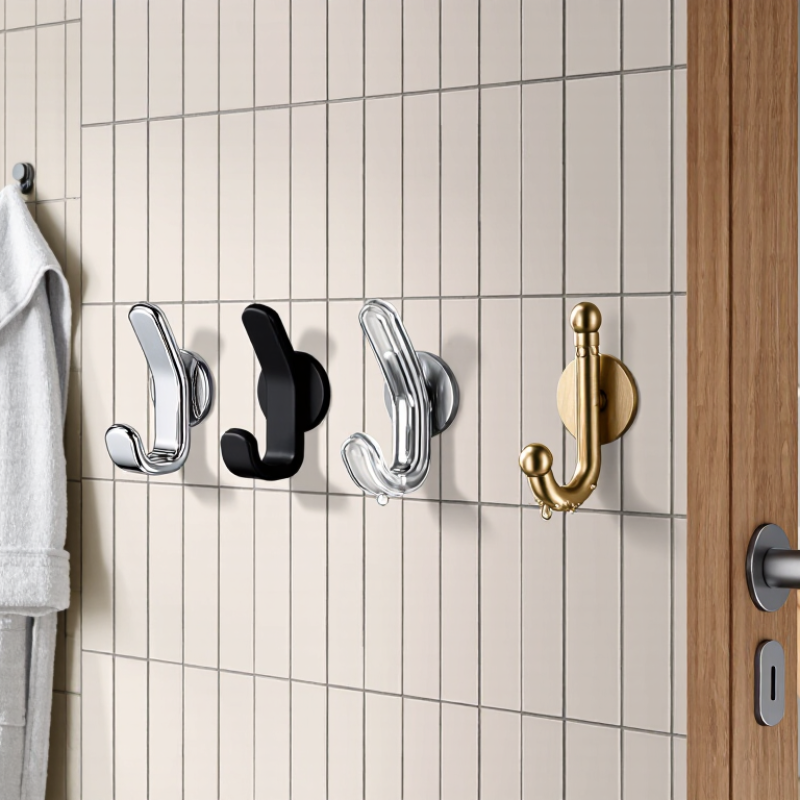
A bathroom robe hook is a wall-mounted or over-door fitting designed to hold a robe, towel, or clothing within easy reach. Its core purpose is simple: keep fabric off the floor and allow it to dry between uses. In 2026, useful designs balance secure support, practical placement, and surfaces that tolerate regular moisture. Small detail. A hook should also suit the wall or door where it will be installed.
Materials and shape affect everyday performance. Smooth, rounded edges help prevent snags, while a sturdy base reduces wobbling when a robe is pulled free. Check the listed load limit and use mounting hardware suited to the surface; tile, drywall, and wood need different approaches. A hook can look strong yet feel awkward when placed too high or behind a door. That is easy to overlook.
Tips: Test the reach before installation by holding a robe where the hook may go. Keep it away from direct spray, and leave enough space for fabric to hang freely. If several hooks are needed, stagger their heights to reduce crowding.
Which Hook Types and Mounting Systems Suit Different Bathrooms?
What Are the Best Bathroom Robe Hooks in 2026?
Which Hook Types and Mounting Systems Suit Different Bathrooms?
The right robe hook depends on wall material, moisture, and daily traffic. A single hook suits a narrow powder room; a double hook helps shared bathrooms. On smooth, glazed tile, quality suction hooks offer a no-drill option, but steam, grout lines, and heavy robes can weaken their hold. Adhesive hooks work best on clean, dry surfaces and for lighter garments. They are convenient, not permanent.
For a busy family bathroom, choose screw-mounted hooks with corrosion-resistant finishes. Fix them into a stud where possible, or use anchors rated for the wall and expected load. Tile needs a suitable masonry bit and careful drilling; rushing can crack it. Houzz’s 2024 U.S. Bathroom Trends Study reports that 84% of renovating homeowners upgraded their showers, making hook placement near wet areas especially worth considering. Keep fabric clear of splashes.
Think about access, too. AARP’s 2024 Home and Community Preferences Survey found that 75% of adults aged 50 and older want to remain in their homes as they age. A hook placed within easy reach can help, but it is not a support device. Never use a robe hook to steady yourself. That distinction is easy to miss. For rentals, removable options may protect walls; for long-term use, properly anchored hardware is usually more dependable.
How Do 304 Stainless Steel’s 18% Chromium and 8% Nickel Support Durability?
For a bathroom robe hook, 304 stainless steel’s “18/8” description refers to roughly 18% chromium and 8% nickel. ASTM A240/A240M specifies a composition range of 18–20% chromium and 8–10.5% nickel for grade 304. Chromium helps form a thin, protective oxide film when the surface meets oxygen. That film can reform after minor damage. Useful, but not magic.
Nickel helps maintain the alloy’s toughness and formability, so a hook can withstand everyday pulling without being unusually brittle. In a steamy bathroom, that combination supports long service life, especially when the hook is properly mounted and water is wiped away occasionally. The Nickel Institute’s technical guidance on stainless steel explains that corrosion performance depends on both alloy composition and the surrounding conditions. Chloride-rich cleaners or lingering deposits can still cause staining or pitting. Not rust-proof. When comparing hooks, check that “304” describes the actual material, not just a finish, and inspect the mounting points; a strong alloy cannot rescue a loose installation.
What Are the Best Bathroom Robe Hooks in 2026?
How do 304 stainless steel’s chromium and nickel content support durability?
Type 304 stainless steel is commonly specified with 18–20% chromium and 8–10.5% nickel by weight. Chromium helps form a protective passive surface layer, while nickel helps stabilize the steel’s austenitic structure and supports ductility. Alloy composition is one durability factor; a robe hook’s performance also depends on its fabrication, finish, installation, and exposure to moisture or cleaning chemicals.
How Does the ADA’s 15–48-Inch Reach Range Guide Accessible Hook Placement?
What Are the Best Bathroom Robe Hooks in 2026?
For accessible placement, the ADA’s 15–48-inch reach range offers a practical starting point. Measure from the finished floor, not from the top of a bath mat or nearby fixture. Where ADA standards apply, coat hooks in toilet rooms must fall within a permitted reach range. A hook set around 42 inches high can be easier for many seated users to reach, but one height will not suit everyone.
Keep the approach clear. A vanity, deep shelf, or towel bar can obstruct a person reaching from a wheelchair, and that may change the allowed reach. Check the actual space in front of the hook, including door swings and narrow gaps. Small detail, big difference. If a shelf sits below the hook, test whether someone can reach over it without stretching or twisting. That part is easy to overlook.
Use a tape measure after installation, then try the hook from both standing and seated positions. A lightweight robe should lift off without snagging on a counter edge. Consider placing a second hook lower, while keeping both securely anchored into suitable wall support. Exact requirements can depend on the room and applicable standards, so confirm the layout against current accessibility guidance. I’d also recheck after adding shelves; a good height can become awkward later.
What Load, Corrosion, and Installation Factors Matter When Comparing Hooks?
What Are the Best Bathroom Robe Hooks in 2026?
When comparing robe hooks, check the rated load and the surface beneath them. A thick, damp robe can pull harder than a light hand towel, especially when someone tugs it off quickly. Treat the stated capacity as a guide, not a promise for every wall. Tile over solid backing differs from hollow drywall. For heavier garments, hooks anchored into a stud or suitable masonry fixing are usually more dependable than adhesive pads. A secure fit matters.
Corrosion resistance matters in steamy bathrooms. Stainless steel and well-finished metals can resist moisture, but quality and upkeep still make a difference. Look closely at seams, screw heads, and the hook’s underside, where water can linger. Ventilation helps, too. It is easy to focus on a shiny finish and overlook the fixing hardware. That can be a mistake.
Tips: Mark the position before drilling, check for pipes or wiring, and use fasteners suited to the wall. Dry the area after installation and recheck screws if the hook starts to wobble. Adhesive hooks need a clean, dry surface and time to set; even then, their hold may weaken in humid rooms.
Conclusion
Bathroom Robe Hooks do more than keep towels and robes off the floor: they add convenient storage while helping a bathroom stay organized. The best choice depends on the room’s layout and the items you plan to hang. Single or multiple hooks, wall-mounted or over-door designs, and different mounting systems each suit different needs. For accessible placement, the ADA’s 15–48-inch reach range can serve as a useful guide, with the final position adjusted to the user and installation location.
When comparing hooks, consider material, load capacity, corrosion resistance, and how securely each unit attaches to the wall or door. 304 stainless steel contains about 18% chromium and 8% nickel, a composition that supports corrosion resistance and everyday durability in humid bathrooms. Check that the chosen hook and its fasteners suit the mounting surface and expected weight, and follow installation instructions to help prevent loosening over time.